Amazon Strategist, 7-Figure Seller & Founder of AmazingCreative

Most Amazon video ads are bad.
Not “could be a little better” bad.
I mean completely forgettable.
Blank thumbnails.
Tiny text.
Slow intros.
Generic product shots.
No clear USP.
No reason to click.
And that is the opportunity.
Because if most brands are still treating Amazon video ads like mini brand commercials, you can beat them by doing something much simpler:
Get attention.
Communicate the USP fast.
Get the click.
Then let the listing do the selling.
That is the core idea behind a good Amazon Sponsored Brands video ad.
The ad does not need to explain every single thing about your product.
It does not need to be a full commercial.
It does not need to have a fancy production budget.
It needs to stop the scroll and make the shopper curious enough to click.
That is the game.
Quick Answer: What Makes a Good Amazon Sponsored Brands Video Ad?
A good Amazon Sponsored Brands video ad does three things fast:
Gets attention
Communicates the product’s USP
Gets the shopper to click into the listing
The best Amazon video ads usually have:
A strong thumbnail or first frame
A clear hook in the first 3–5 seconds
Huge readable text
A simple USP
A strong product or lifestyle visual
UGC or real-life footage when available
A comparison angle
Fast pacing
Mobile-friendly formatting
Multiple creative variations for testing
The biggest mistake is trying to make the video ad do too much.
The listing does the selling.
The video ad gets the click.
Why Amazon Video Ads Matter
Amazon is not TikTok.
Amazon is not Instagram.
People are on Amazon to buy.
That means video ads on Amazon sit much closer to the bottom of the funnel.
A shopper searches a keyword, sees a product, compares options, and decides what to click.
So your video ad has to work in that exact environment.
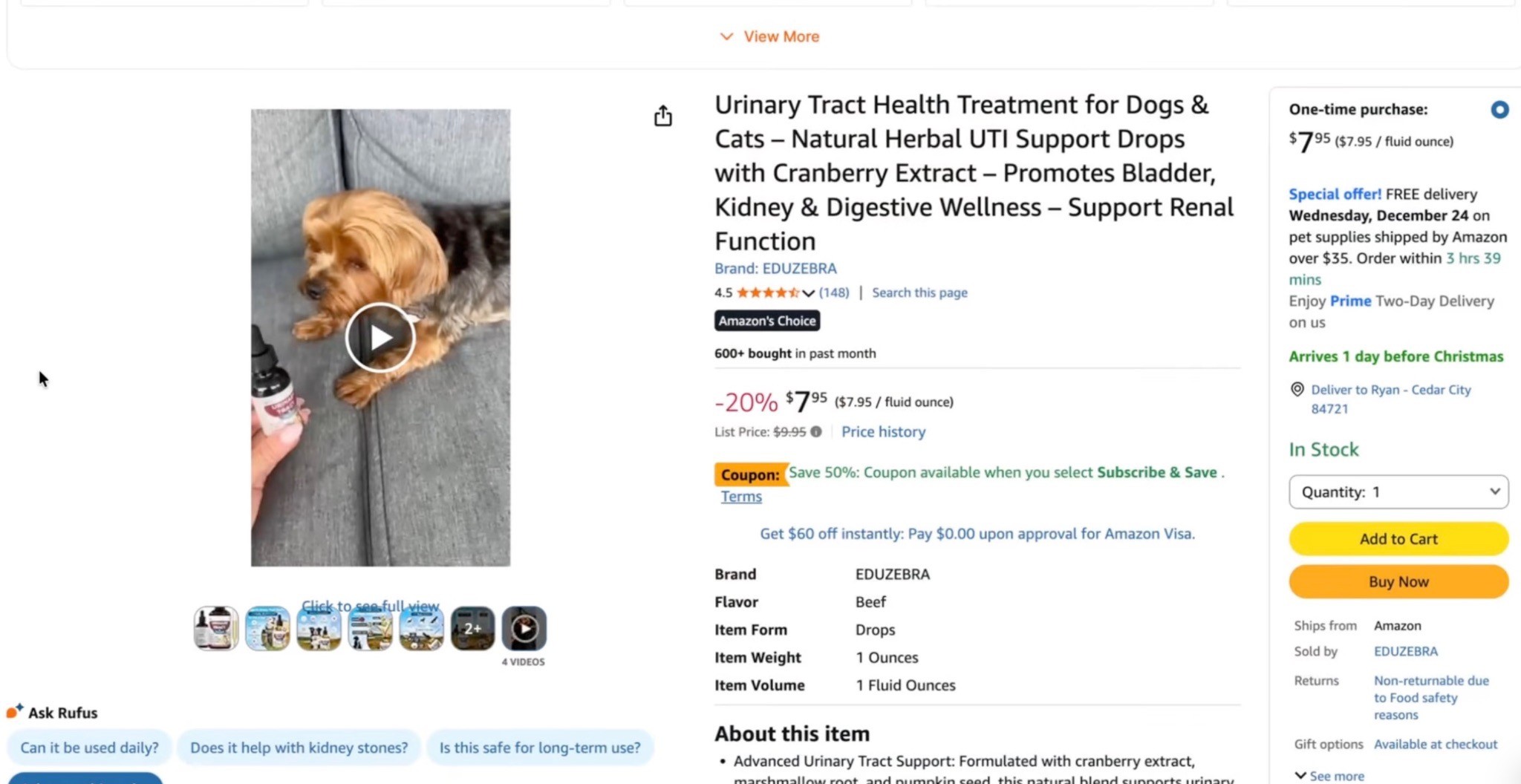
It has to stand out on a search results page filled with product images, titles, reviews, prices, coupons, and competitors.
The video ad’s job is not to entertain someone for 60 seconds.
The job is to interrupt the scroll and make them think:
“Okay, this looks interesting enough to click.”
That is why the creative strategy matters so much.
A great video ad can lower ACOS, increase sales, and become one of the strongest parts of your Amazon advertising account.
But only if the creative is built for how shoppers actually behave on Amazon.
And once that shopper lands on the page, the listing has to do its job. That is where the Amazon Conversion Rate Optimization Guide comes in, because better ads only matter if the page turns more of those clicks into buyers.
The Biggest Mistake Brands Make With Amazon Video Ads
The biggest mistake is treating the ad like a normal video.
Most brands think:
“Let’s make a nice brand video.”
Wrong mindset.
On Amazon, shoppers are moving fast.
Most people are not sitting there patiently watching the entire video.
They are scrolling.
They are comparing.
They are deciding whether to click or keep moving.
So the first few seconds matter more than everything else.
If the first frame is boring, you lose.
If the first 3 seconds are slow, you lose.
If the text is too small, you lose.
If the ad does not tell me why the product is different, you lose.
Your Amazon video ad needs to be stupid simple.
Huge text.
Clear USP.
Strong visual.
Fast hook.
That is it.
The Billboard Method
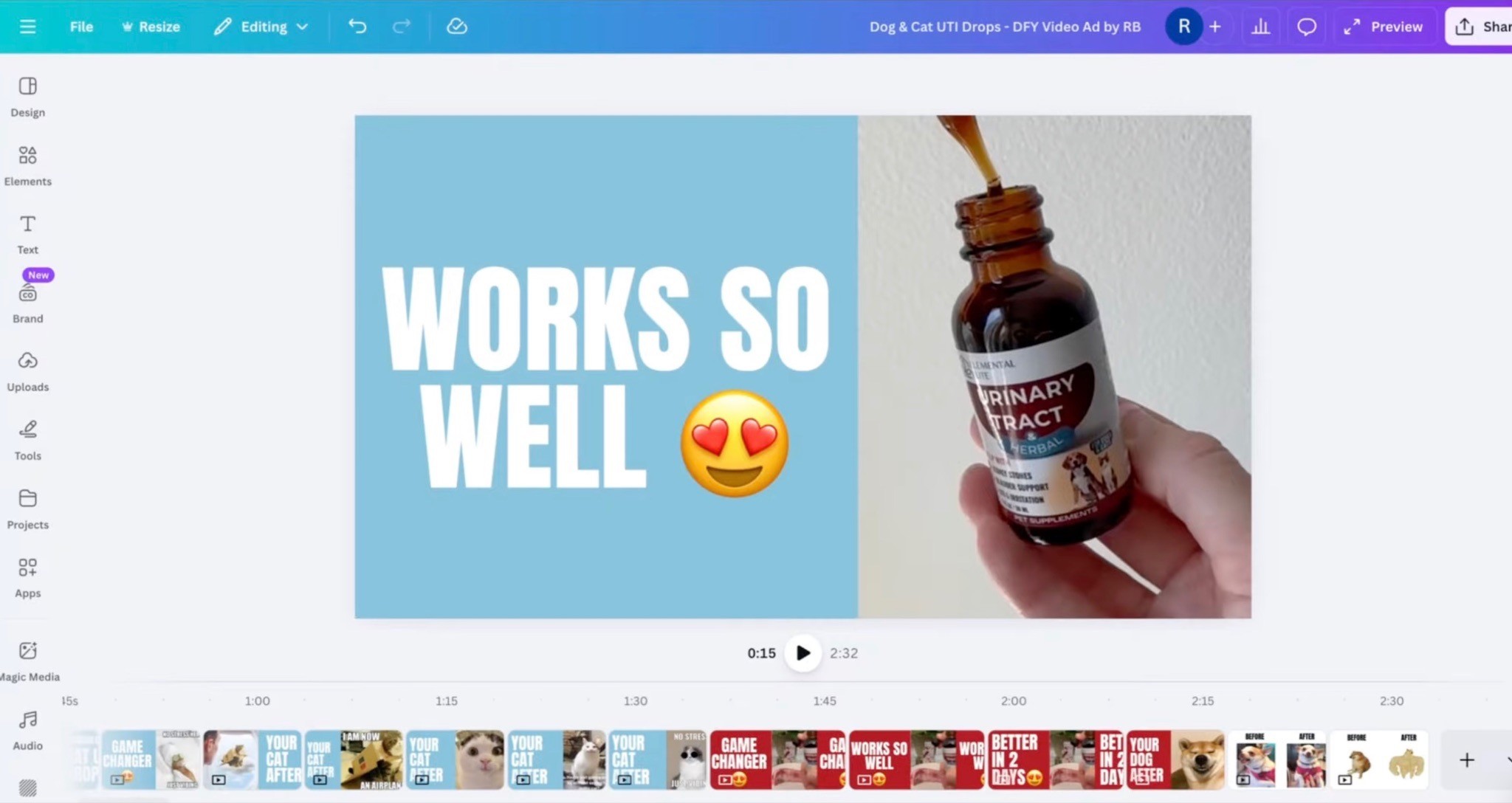
The billboard method is one of my favorite ways to create Amazon video ads.
The idea is simple:
Treat the video ad like a billboard.
Not a movie.
Not a commercial.
A billboard.
That means the shopper should understand the main idea almost instantly.
A strong billboard-style Amazon video ad usually has:
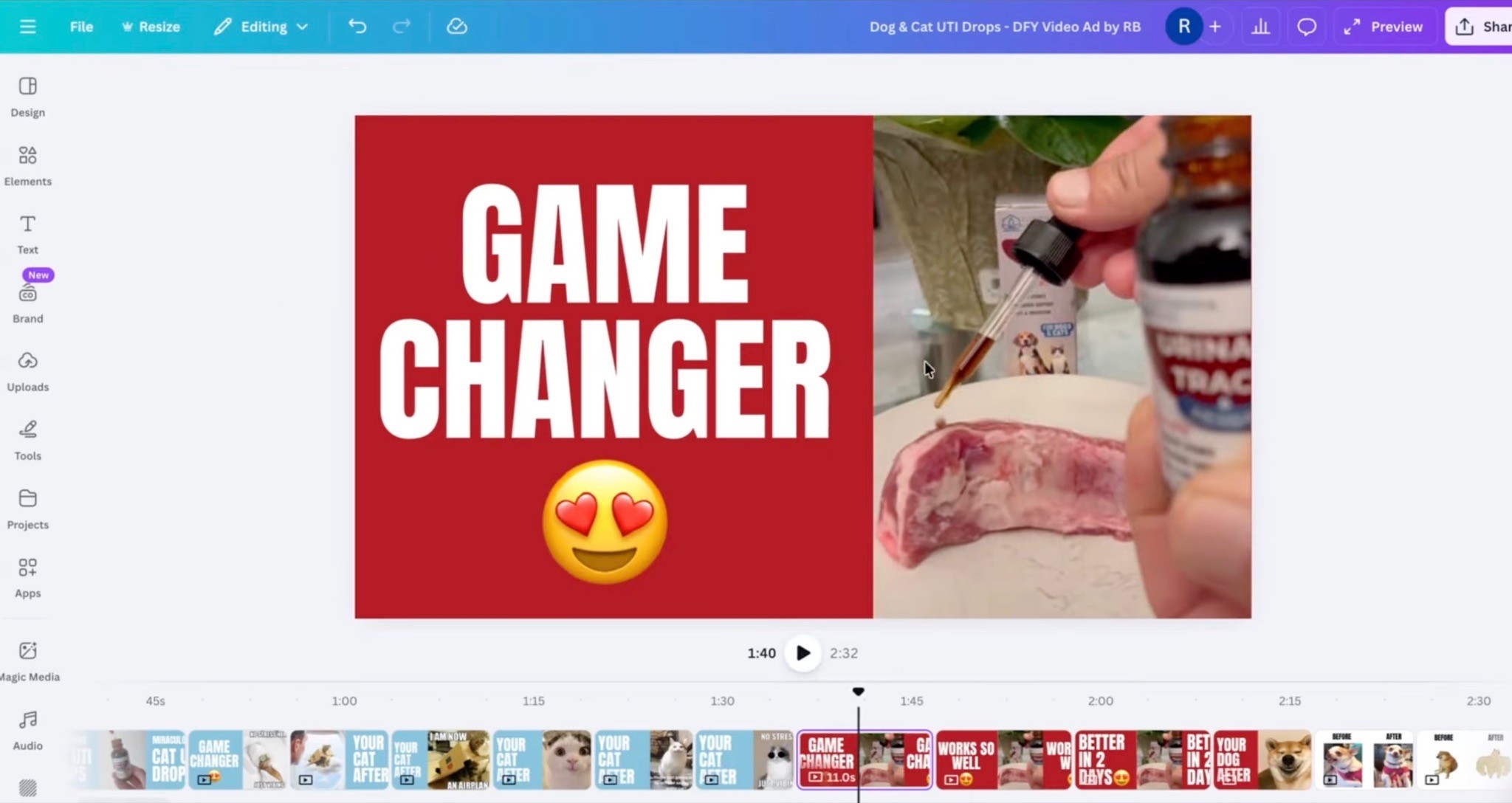
Huge text on one side
Product, UGC, or lifestyle footage on the other side
A simple USP headline
A clear visual hook
Brand colors
Minimal movement
A click-worthy first 3–5 seconds
The reason this works is because a lot of shoppers will see the ad without audio.
Some will only see the thumbnail.
Some will only watch two seconds.
So if your ad only works when someone watches the whole thing with sound on, it is probably not built correctly for Amazon.
The billboard method makes the message obvious without needing the shopper to work.
I also broke down the full process visually in my YouTube walkthrough, How I Make SUPER High ROI Amazon Video Ads Step by Step, where I show how I research the product, find the USP, pull the best assets, write the hooks, and turn everything into simple video ad variations built for testing.
The Real Goal: Get the Click

This is the part most brands get wrong.
The video ad does not need to close the sale.
The product page closes the sale.
That is why your listing still has to be strong. If the ad gets the click but the page does not convert, you are just paying for traffic that leaks. For the full page-side breakdown, read the Amazon Listing Optimization Guide for Higher Conversion Rates.
The video ad needs to get the click.
That means your creative should be focused on one thing:
What will make the shopper stop and click?
Sometimes that is a strong USP.
Sometimes it is a comparison angle.
Sometimes it is a pattern interrupt.
Sometimes it is UGC.
Sometimes it is a funny meme.
Sometimes it is just a huge headline that says something different from every other product on the page.
The listing does the selling.
The ad gets them there.
That mindset makes your video ads much easier to create.
Start With Product Research
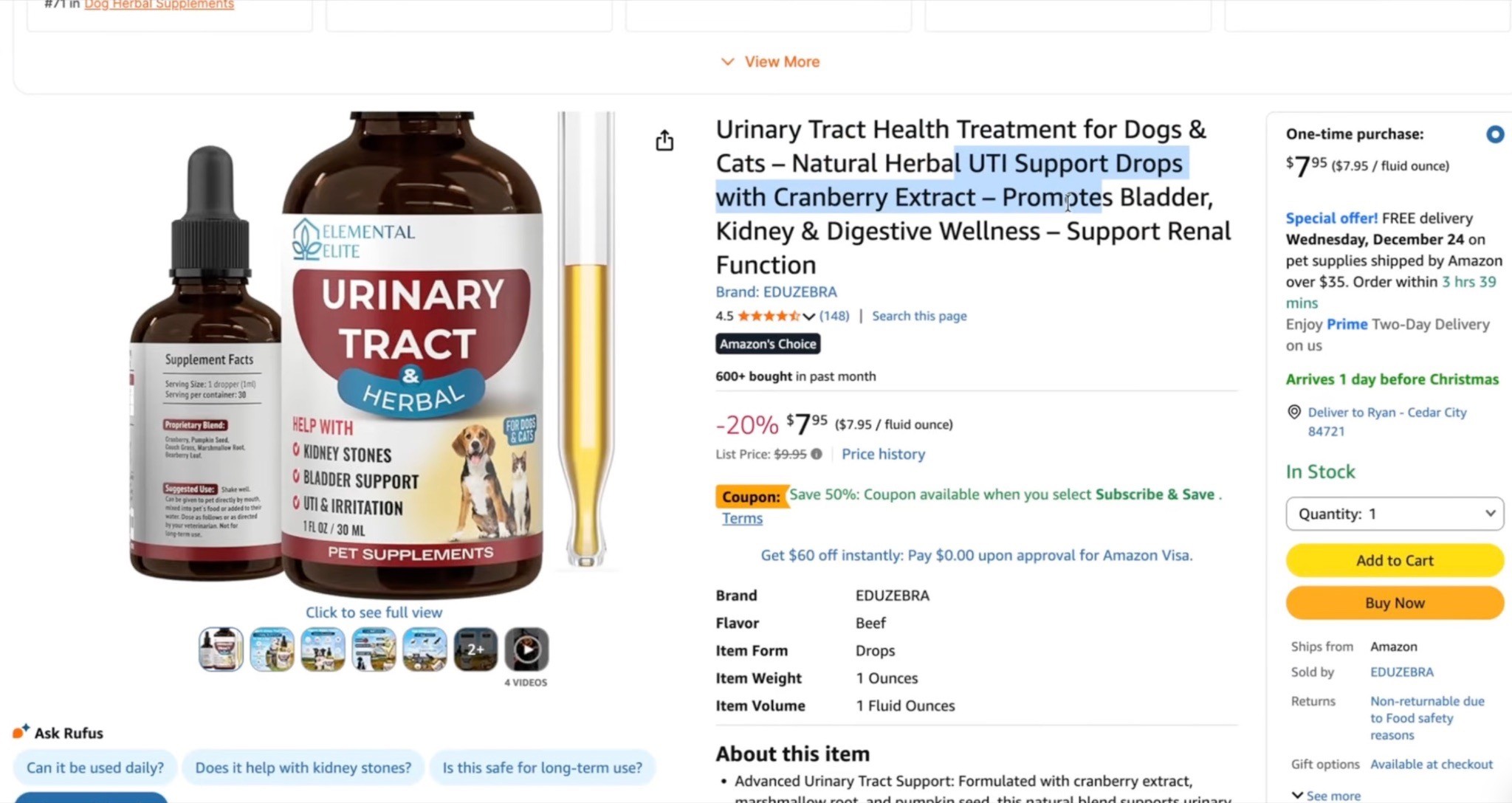
Before making the ad, do the research.
Do not just open Canva and start designing.
First, understand the product.
Look at:
The Amazon listing
Product title
Bullets
Gallery images
A+ Content
Reviews
Brand website
Product page
Instagram
TikTok
YouTube
Customer videos
Competitor listings
You are looking for two things:
The strongest USP
The strongest visual assets
The USP gives you the headline.
The assets give you the video.
If you skip this step, you end up with generic ads that look nice but do not say anything.
Find the Main Keyword
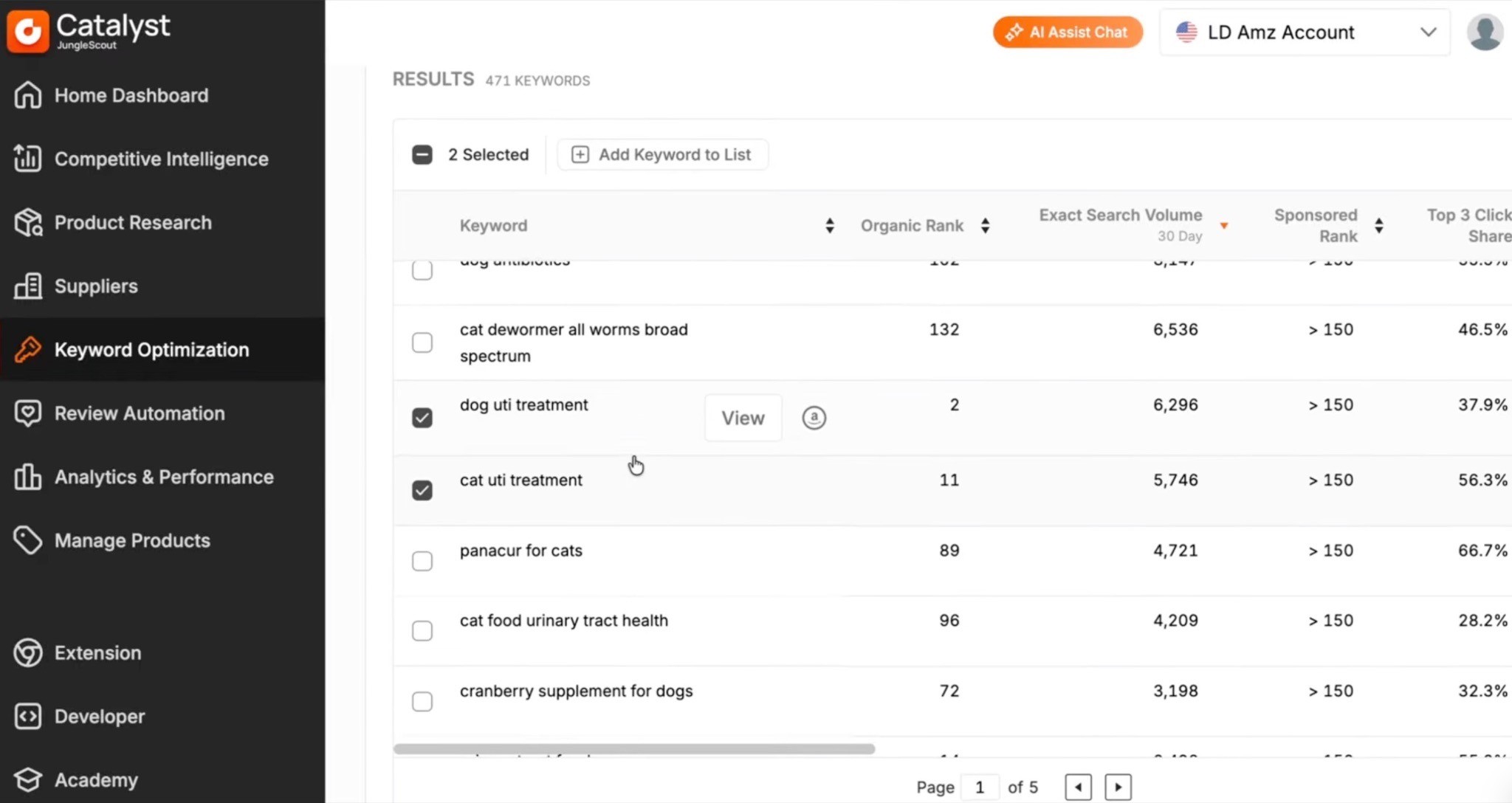
Next, look at the product’s main keywords.
This matters because the ad will show in a competitive search environment.
For example, if the product is a dog UTI treatment, search the main terms:
Dog UTI treatment
Cat UTI treatment
UTI drops for dogs
Urinary tract treatment for cats
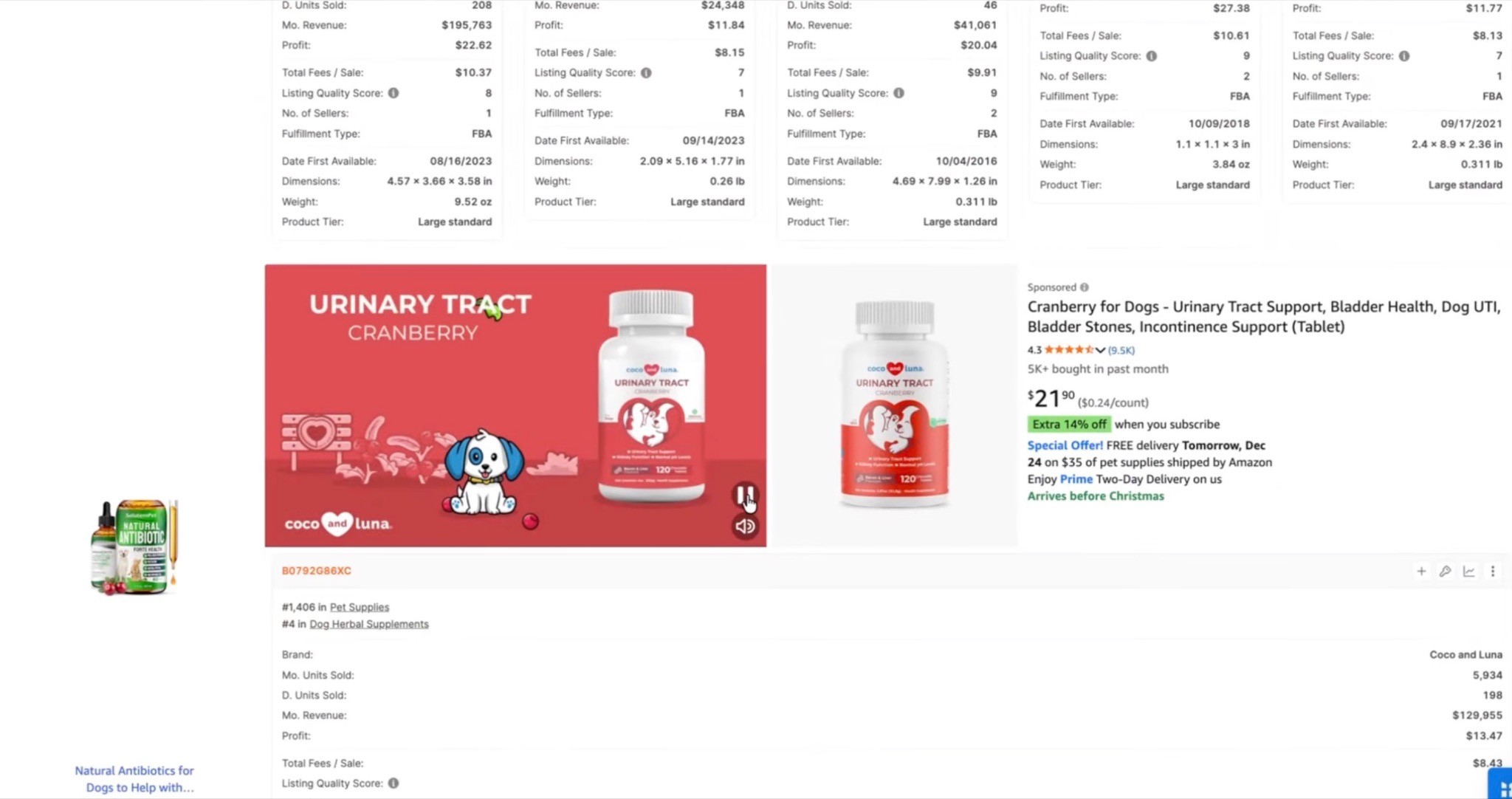
Then look at the search results.
Ask:
What competitors show up?
Are they running video ads?
What do their video thumbnails look like?
Are the ads boring?
Are they saying anything useful?
Is there a way to stand out?
What is the shopper likely comparing?
You are not just making a video in isolation.
You are making a video that has to win attention on a specific search page.
That context matters.
Study Competitor Video Ads
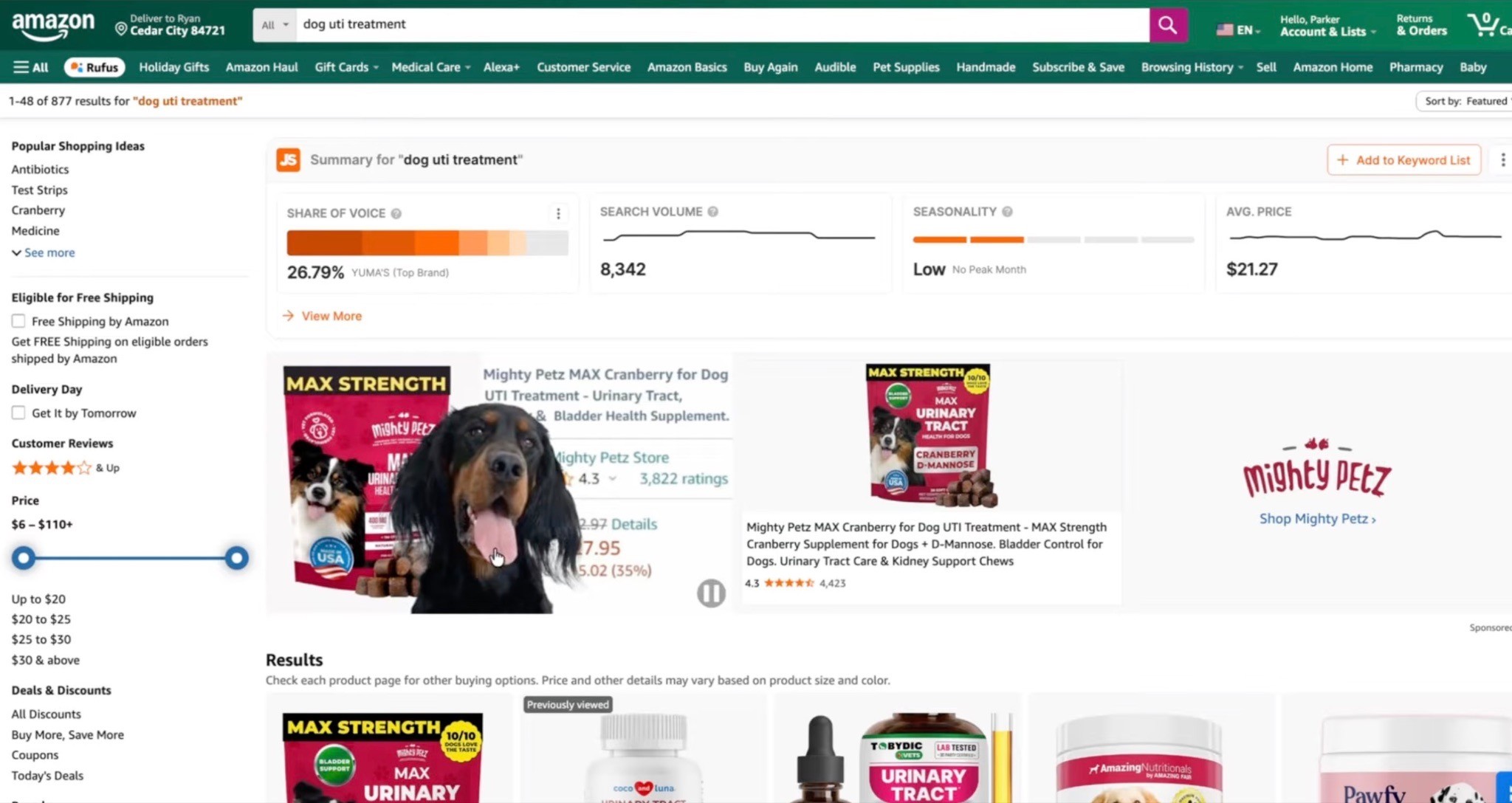
When you search the main keyword, pay attention to competitor video ads.
Most of the time, you will see a lot of weak creative.
Common problems:
Blank first frame
No text
Tiny captions
Slow intro
Generic product footage
No comparison angle
No USP
No reason to click
Bad thumbnail
Confusing message
This is good news.
It means you do not need to make the most cinematic ad in the world.
You just need to make one that is clearer, faster, and more clickable.
The bar is lower than most brands think.
The Thumbnail Strategy
Amazon video ads do not work exactly like YouTube thumbnails, but the thumbnail mindset still matters.
Depending on the placement, Amazon may show a thumbnail or autoplay part of the video.
That means your first few seconds need to work as a thumbnail.
The first 3–5 seconds should be strong enough that almost any frame could make someone stop.
Avoid:
Blank screens
Slow fade-ins
Logo-only intros
Tiny text
Nothing happening
Confusing visuals
Use:
Huge text
Product in use
Pattern interrupt
UGC clip
Strong comparison
Founder face
Funny visual
Bold claim
Curiosity hook
Think of the first few seconds as your Amazon video thumbnail.
This is very similar to how I think about Amazon main images. The goal is to win attention before the shopper ever reaches the listing. If you want the full CTR framework, read the Amazon Main Image Optimization Guide.
Why the First 3–5 Seconds Matter So Much
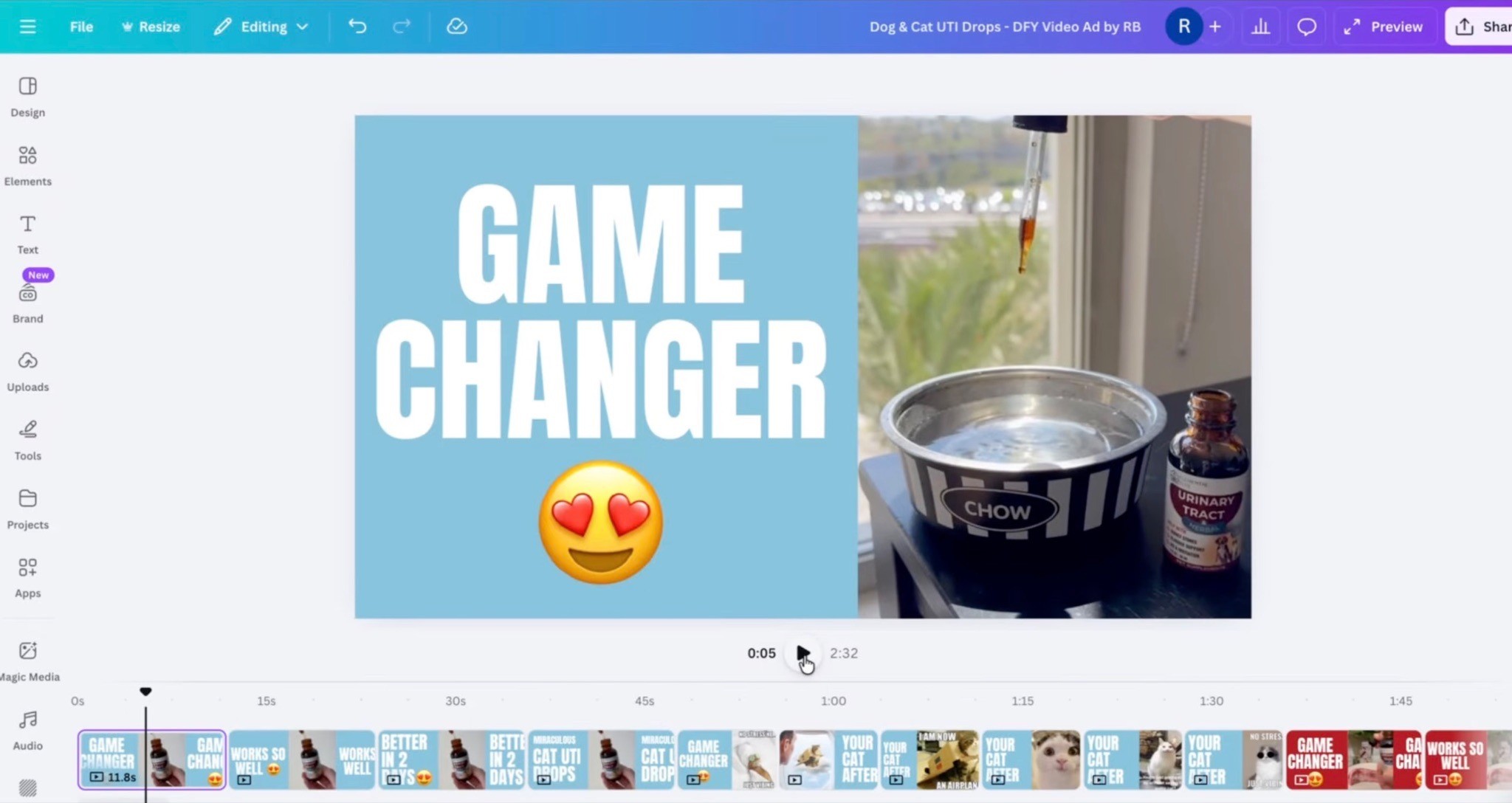
Most shoppers will not watch the full video.
They might see the first frame.
They might watch two seconds.
They might watch five seconds.
Then they either click or keep scrolling.
So the first 3–5 seconds need to answer:
What is this?
Why is it different?
Why should I care?
Should I click?
That is why the first 3–5 seconds should usually include your biggest hook.
Not your logo.
Not a slow product reveal.
Not a lifestyle scene with no context.
Lead with the reason to pay attention.
Use Huge Text
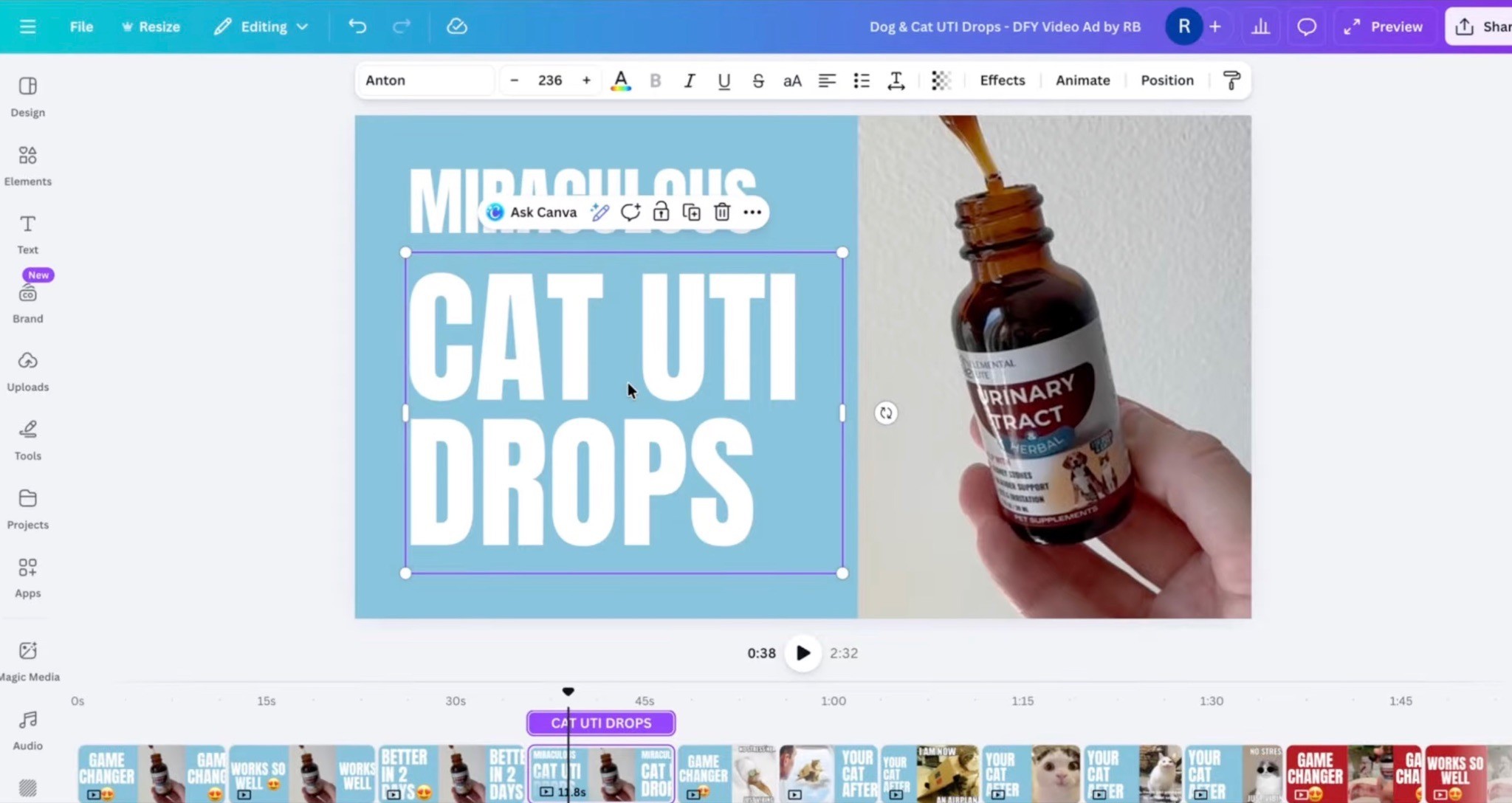
Huge text is one of the simplest ways to make Amazon video ads better.
Most shoppers are not watching with audio.
And if they are on mobile, small captions are hard to read.
So make the text big.
Really big.
The text should be readable at a glance.
Good headline examples:
Not Your Average Creatine Gummy
The Most Bioavailable Magnesium
Game Changer
Works So Well
Better in 2 Days
Experience the Difference
Unlike the Others
Clean Energy Without the Crash
Third-Party Tested
No More Messy Powder
Your Dog After
No Stress, Just Vibing
The exact headline depends on the product.
But the principle stays the same:
Big text.
Simple idea.
Fast understanding.
Use the USP as the Hook

A good video ad should communicate the USP quickly.
The USP is the unique selling position.
Or said another way:
What makes this product unique and special?
Your hook should usually come from that.
For example:
If the product is magnesium and the USP is bioavailability, the hook could be:
“The Most Bioavailable Magnesium”
If the product has third-party testing, the hook could be:
“Third-Party Tested”
If the product is a nootropic gummy and the category is full of generic gummies, the hook could be:
“Not Your Average Brain Booster”
If the product is cleaner than the competition, the hook could be:
“Unlike the Others”
Do not make the shopper guess why your product matters.
Tell them fast.
Use Comparison Angles
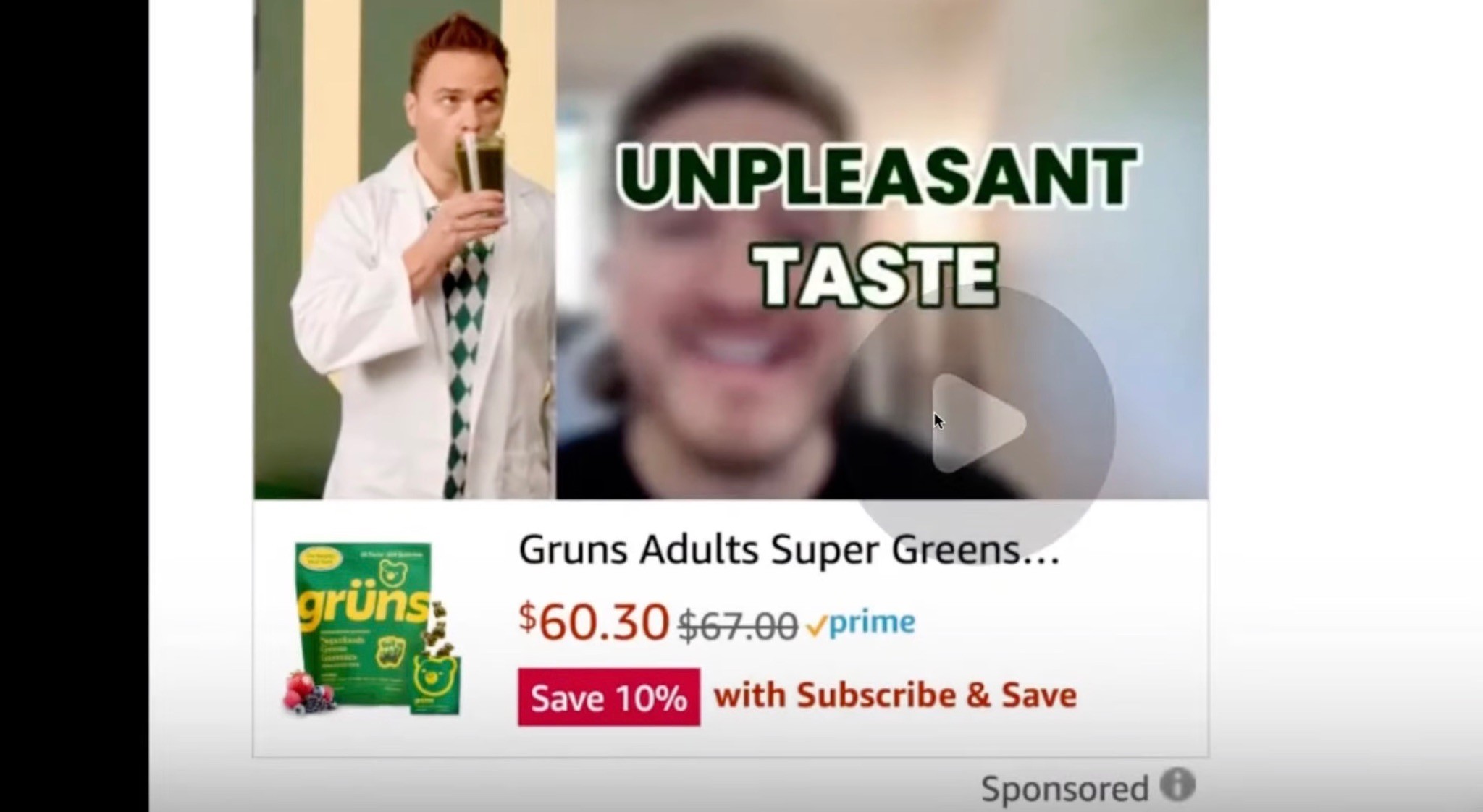
Amazon is a comparison platform.
That is why comparison-based creative works so well.
Shoppers are already comparing products.
So your video ad can lean into that.
Comparison angles include:
Us vs. them
Not that, this
Unlike the others
Why we’re different
Better than messy powder
More convenient than capsules
No sugar crash
No artificial fillers
Third-party tested vs. generic alternatives
Clean formula vs. mystery blends
The goal is not to explain every detail.
The goal is to plant the idea:
“This one is different.”
Then the shopper clicks into the listing to learn why.
That is exactly what good Amazon creative should do.
Pattern Interrupts Work
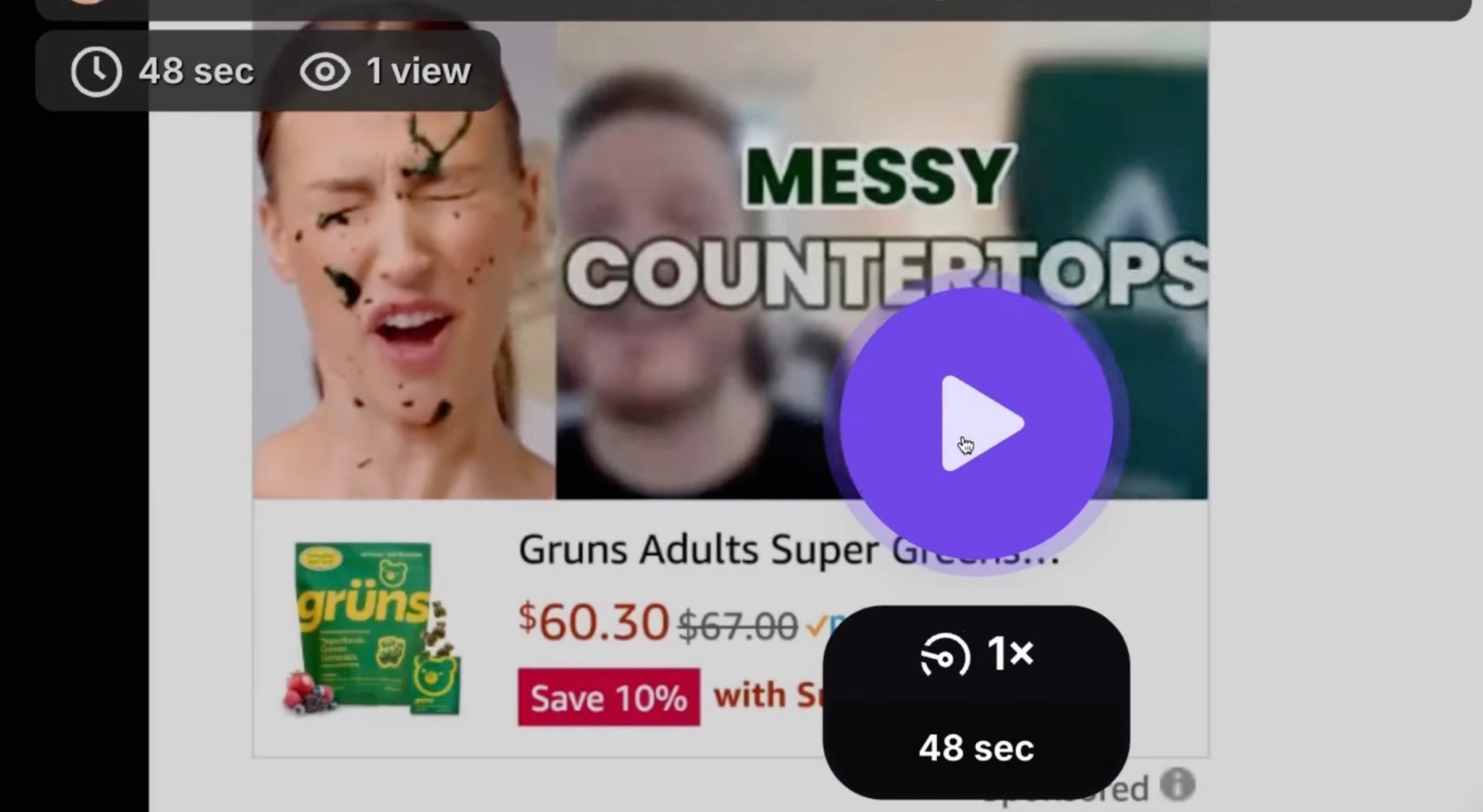
A pattern interrupt is something that makes someone stop scrolling.
On TikTok and Instagram, this is normal.
On Amazon, most brands barely use it.
That is why it stands out.
Pattern interrupts can be:
A funny pet meme
A surprising before/after visual
A face reacting
Product being poured onto food
A messy powder comparison
A big red X over the competitor style
UGC clip with movement
Product being used in a visually interesting way
A bold headline with a weird visual
The point is not to be random.
The point is to get attention while still being relevant to the product.
If the pattern interrupt gets attention but has nothing to do with the product, the ad may not get approved or may attract bad clicks.
Keep it connected.
Use UGC When You Have It
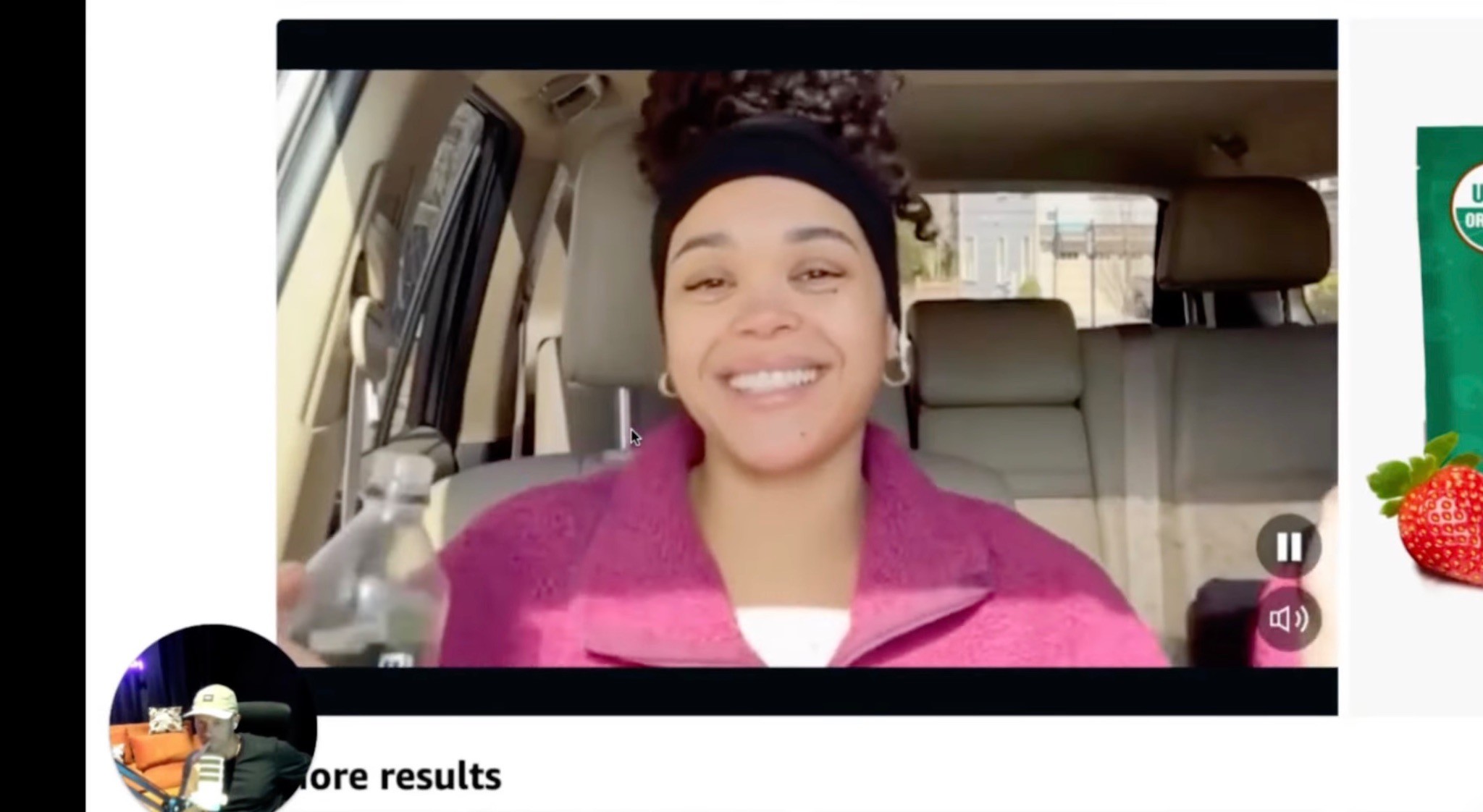
UGC is one of the best assets for Amazon video ads.
It feels real.
It catches attention.
It shows the product in use.
If you do not have enough strong product-in-use footage yet, start with better creative assets.
UGC helps the shopper imagine themselves using the product.
You can use:
Customer testimonial clips
Unboxing videos
Product demo clips
TikTok-style videos
Instagram reels
Review videos
Before/after reactions, if compliant
Lifestyle clips
But do not just dump raw UGC into the ad.
Edit it.
Add huge text.
Make the first few seconds strong.
Cut out slow parts.
Use the best moment first.
Remember, you are not making a documentary.
You are making an ad.
Use Founder or Expert Videos
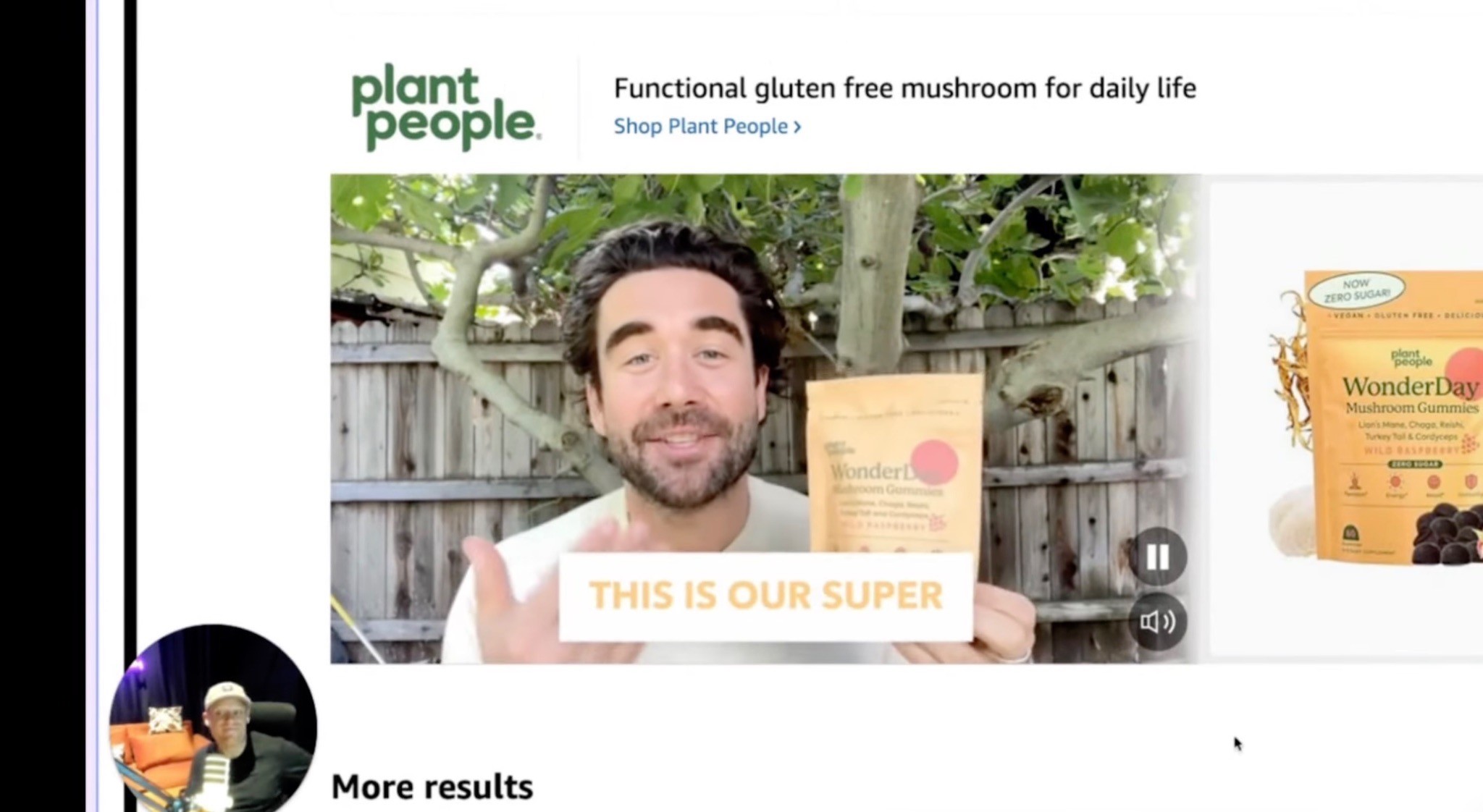
Founder videos can work well, especially when the brand has a strong story or technical product.
A simple founder-style video can be:
“Hey, I created this product because…”
That can work because it adds trust.
It feels more human than a generic product ad.
A strong founder video should:
Start with a hook
Explain the problem
Say why the product exists
Explain the USP
Use big captions
Keep the pacing tight
Show the product clearly
Avoid tiny text
A founder holding up the product and explaining it clearly can be better than an overproduced ad that says nothing.
Use the Brand’s Existing Website and Social Content

You do not always need to create everything from scratch.
A lot of times, the brand already has useful assets on:
Their website homepage
Product page
Instagram
TikTok
YouTube
A+ Content
Brand Story
Customer reviews
UGC library
A lot of the same assets you use for video ads can also be used inside Premium A+ Content. If you are rebuilding the whole creative stack, read the Amazon Premium A+ Content Guide too.
Look for:
Strong homepage headlines
Founder photos
Product-in-use videos
Awards
Certifications
Lab testing visuals
Comparison charts
Customer videos
Lifestyle images
Brand colors
Product page copy
Then turn the best pieces into simple ad variations.
Sometimes the best headline is already on the website.
You just need to pull it into the Amazon ad format.
Simple Canva Workflow for Amazon Video Ads
You can make a lot of strong Amazon video ads in Canva.
Here’s the basic workflow:
Research the product
Identify the main USP
Check the brand website
Check social content
Find the best photo or video assets
Check the main Amazon keywords
Look at competitor video ads
Choose the hook
Build a split-screen layout
Put huge text on one side
Put the best visual on the other side
Make multiple headline variations
Export each version separately
Send to the PPC manager for testing
This does not need to be complicated.
Some winning ads are literally a 7–8 second still-image video with a strong hook.
The hard part is not Canva.
The hard part is knowing what to say.
The Split-Screen Layout
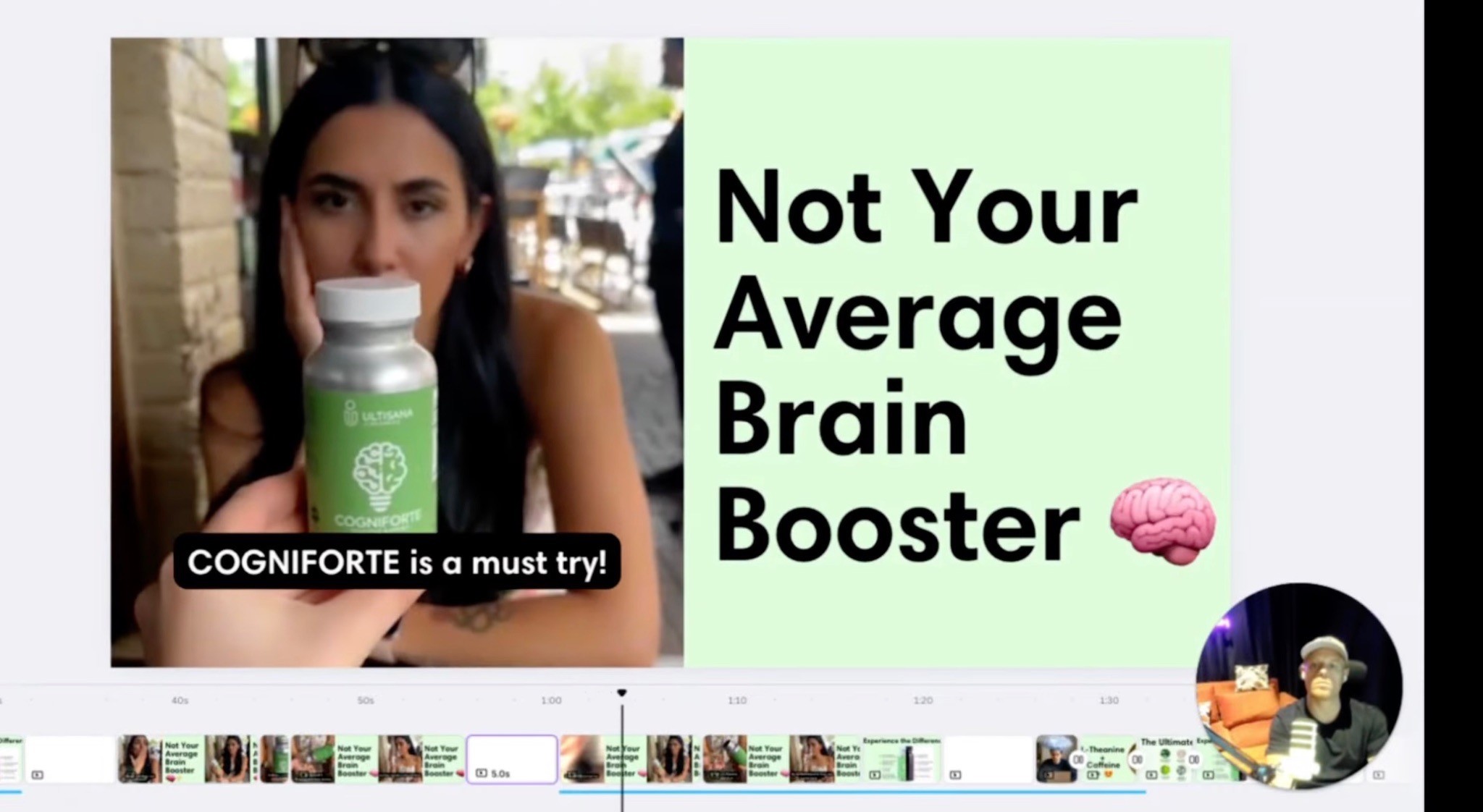
A simple split-screen layout works extremely well.
One side:
Huge text.
Other side:
Best visual.
That visual could be:
Product photo
UGC video
Lifestyle clip
Founder photo
Product being used
Comparison chart
Lab test result
Award badge
Strong website graphic
The split-screen format works because it is easy to understand.
The shopper sees the hook and the proof at the same time.
No confusion.
No tiny captions.
No waiting.
Create Multiple Hook Variations
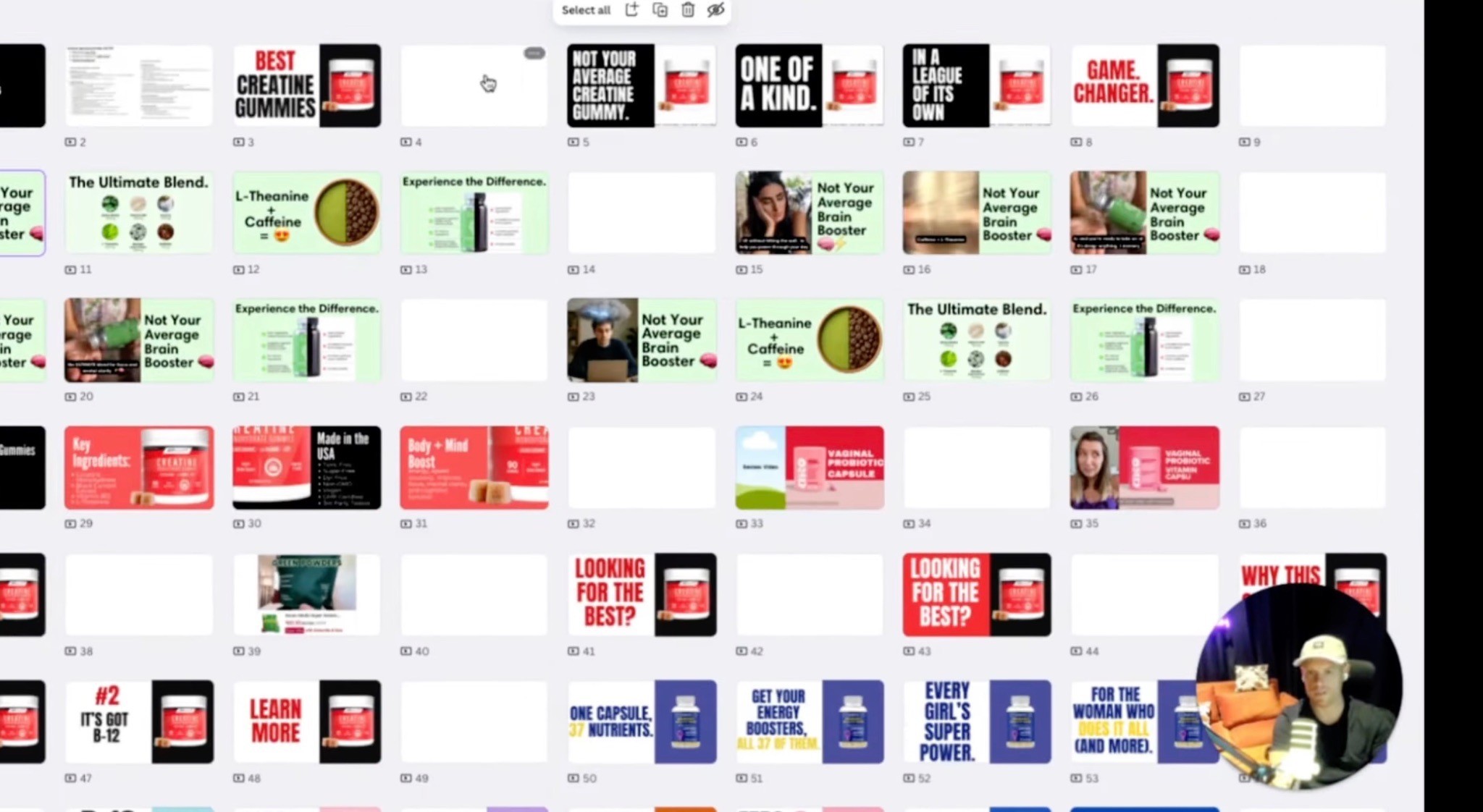
Do not make one ad and call it done.
Make variations.
The easiest thing to test is the headline.
For example, for the same product, you could test:
Game Changer
Works So Well
Better in 2 Days
The Most Bioavailable Magnesium
Third-Party Tested
Experience the Difference
Not Your Average Probiotic
Why Choose Us?
Clean Energy Without the Crash
Same visual.
Different hook.
Then the PPC manager can test which one gets the best results.
Amazon creative is not about guessing.
It is about testing.
Static Image Video Ads Can Work

Not every Amazon video ad needs a real video clip.
Sometimes a still image turned into a short video can work.
For example:
A strong product image
A comparison chart
A lab test graphic
A founder photo
A homepage hero image
A UGC screenshot
An award badge
A product-in-use image
Make it 7–8 seconds long.
Add a big headline.
Export as a video.
Done.
That might sound too simple, but simple often wins because the shopper understands it instantly.
The minimum effective video is often much simpler than brands think.
Use Comparison Charts Carefully
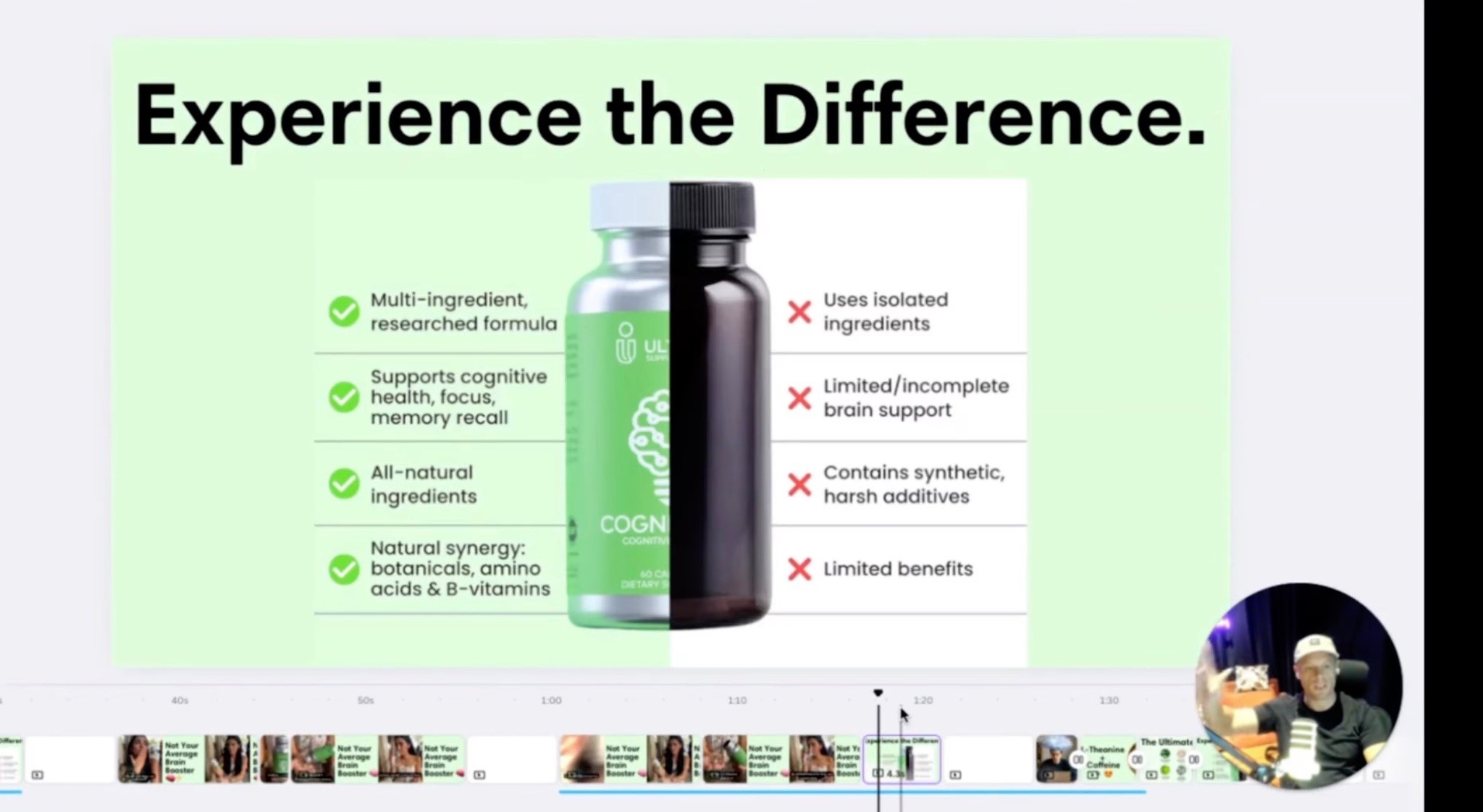
Comparison charts can work as video ads, but keep expectations realistic.
Most shoppers will not read every row.
That is not the point.
The point is the visual message:
“We are different.”
A comparison chart in a video ad can work if the headline says something like:
Experience the Difference
Unlike the Others
Why Choose Us?
See the Difference
Not Your Average Supplement
The chart becomes supporting proof.
The listing can do the deeper explaining after the click.
Should You Add Music?
Music can help, but it is not always necessary.
A lot of Amazon shoppers will not hear the audio anyway.
So your ad should work without sound.
That means:
Big text
Clear visuals
Strong first frame
Easy-to-understand message
If you add music, treat it as a bonus.
Do not rely on audio to explain the product.
Where Should the Ad Send Shoppers?
Most of the time, send shoppers to the product detail page.
That is where they can buy.
But there are cases where sending them to a storefront page can make sense.
For example:
You are promoting a collection
You are advertising multiple products
You want to send shoppers to a product lineup
The ad is more brand-level than product-level
But for most Sponsored Brands video ads, the product detail page is the safest and most direct destination.
The ad gets the click.
The listing sells.
What to Test First
Start by testing the most obvious creative variables.
1. Hook
Test different headline angles.
Example:
Third-Party Tested
The Most Bioavailable Magnesium
Experience the Difference
2. Visual
Test different assets.
Example:
Product photo
UGC clip
Founder photo
Comparison chart
Lifestyle image
3. Format
Test different video styles.
Example:
Still-image video
Split-screen billboard ad
UGC highlight reel
Founder video
A+ slideshow
4. Keyword Group
Test ads against different keyword groups.
Example:
Dog UTI keywords
Cat UTI keywords
Brand competitor keywords
Main category keywords
5. Comparison Angle
Test whether comparison-based creative beats generic product messaging.
Amazon is a comparison platform, so this is often worth testing.
This is also where good campaign management matters. Creative gives the ad a better shot, but the testing structure, keyword targeting, bids, and budget control still need to be handled properly.
How Many Video Ads Should You Make?
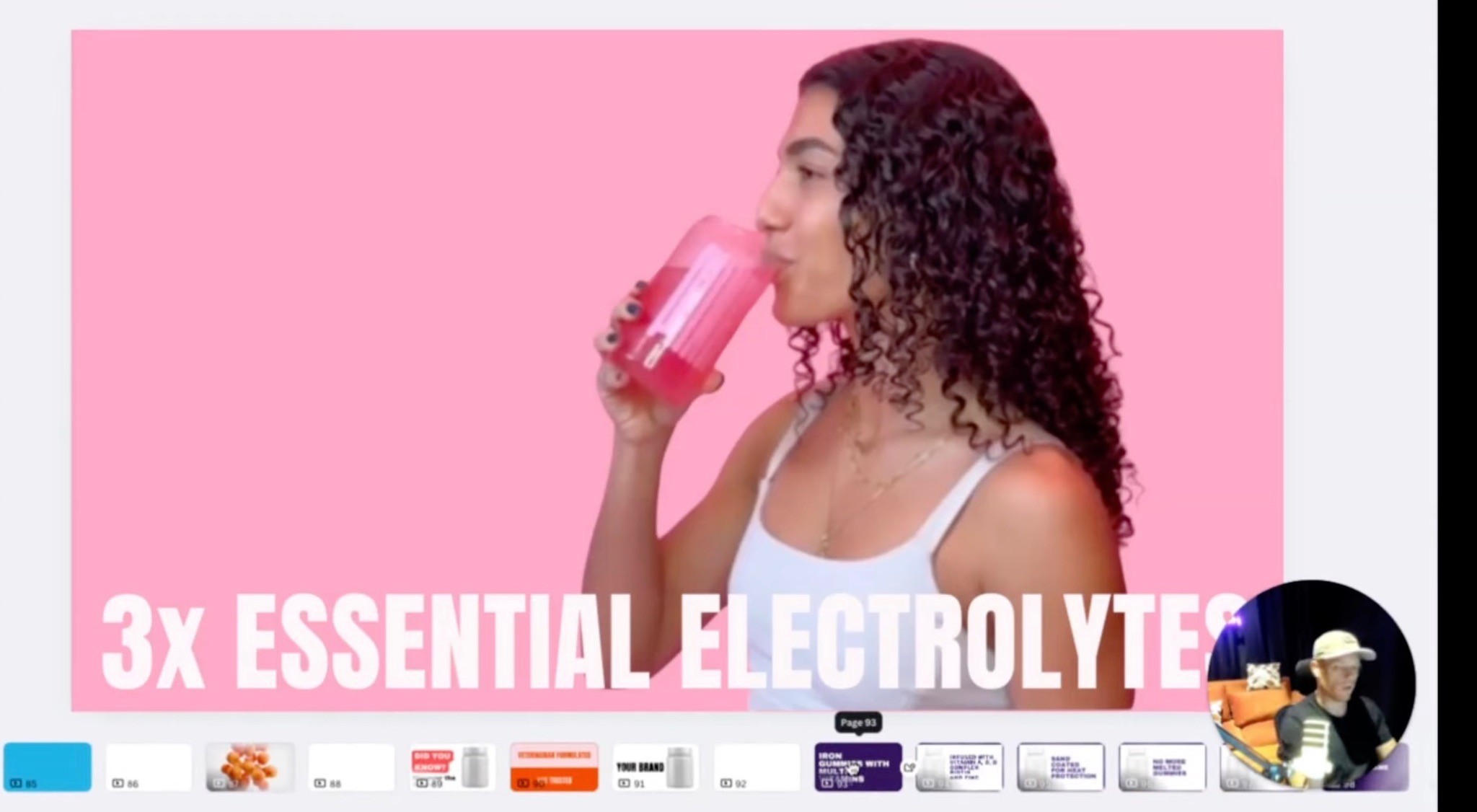
Start with at least five creative variations if budget allows.
That does not mean five expensive videos.
It could mean:
Same visual, five hooks
Same hook, five visuals
Three billboard ads
One UGC version
One comparison version
The goal is to give the PPC manager enough creative to learn what gets attention.
If the account is spending more, test more.
If budget is limited, start with the strongest three.
The key is not to fall in love with one idea.
Test.
Keep what works.
Cut what does not.
Example: Pet UTI Drops Ad
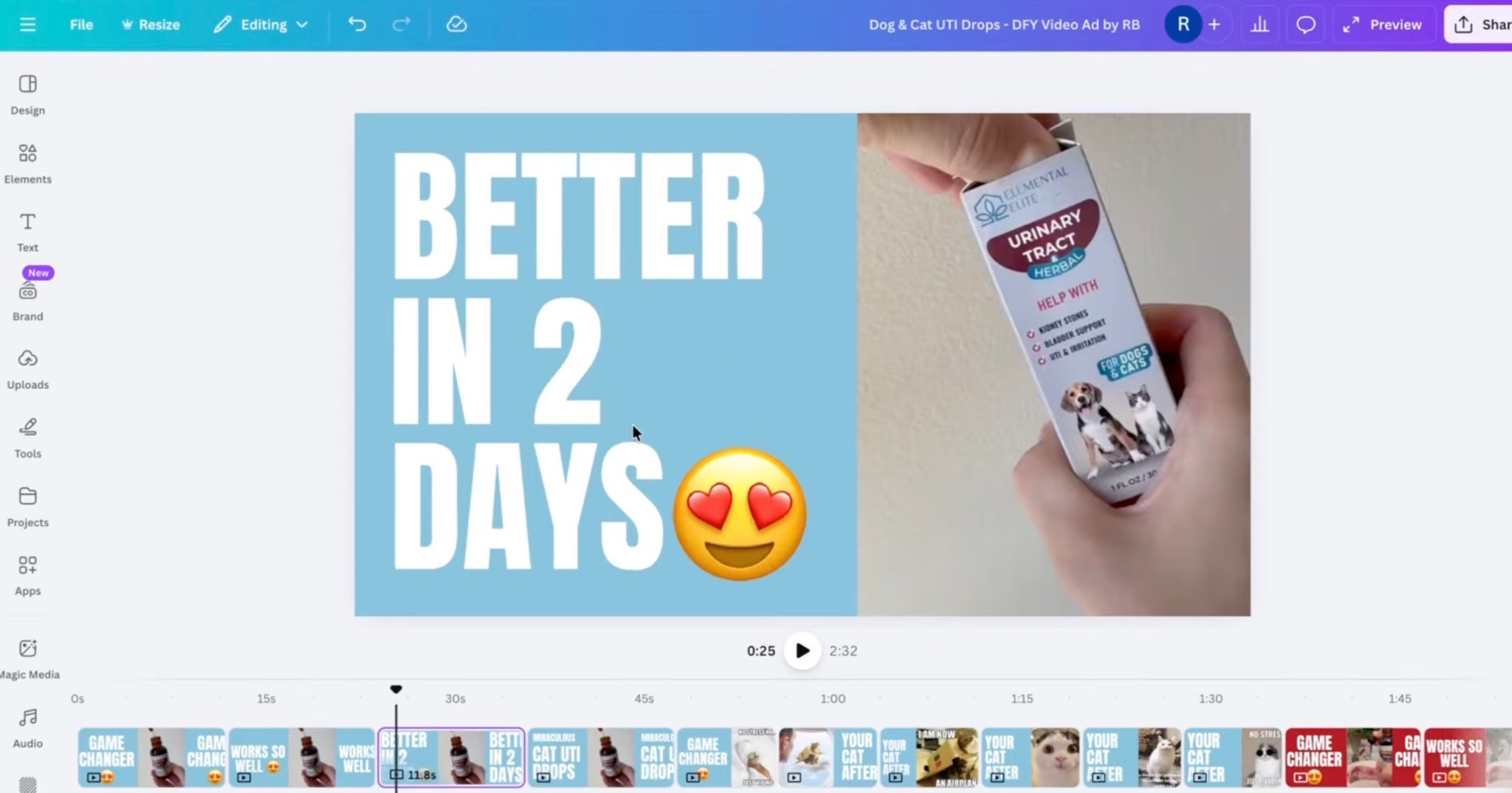
Let’s say the product is UTI drops for cats and dogs.
The first step is to understand the product.
Then you check the main keywords:
Dog UTI treatment
Cat UTI treatment
UTI drops for dogs
Cat urinary tract treatment
Next, you check competitor video ads.
If most competitors have boring videos, weak thumbnails, and no strong hook, that is the opening.
Then you look for the best visuals.
Maybe the best asset is a video of the drops being added to water.
Maybe another strong asset is the drops being added to food.
For dogs, maybe a visual of drops on steak becomes a pattern interrupt.
Then test hooks like:
Game Changer
Works So Well
Better in 2 Days
Dog UTI Drops
Cat UTI Drops
If the product does not have a crazy unique USP, you can still win attention with a better billboard-style ad than the competitors.
Example: Magnesium Ad
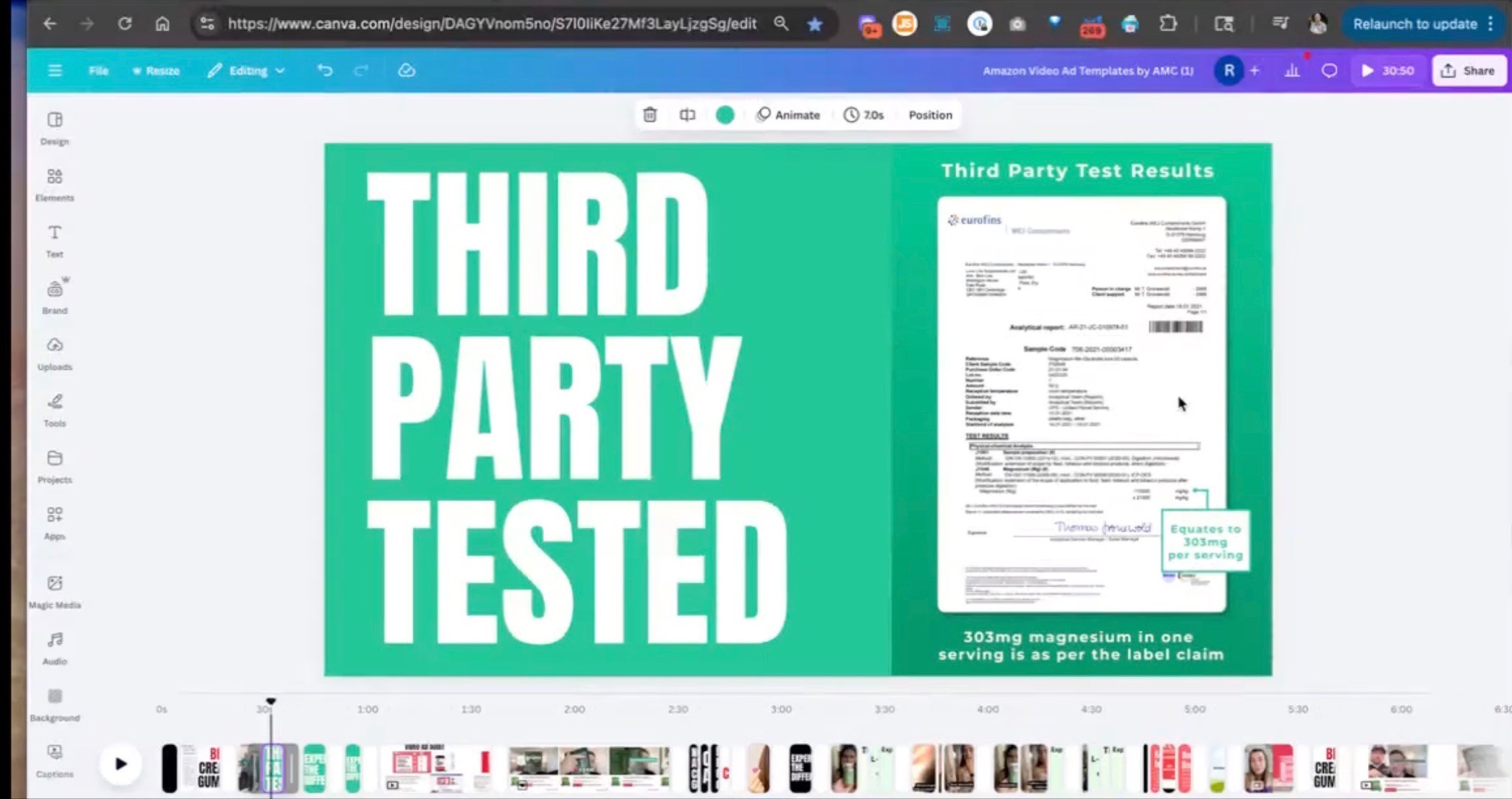
Let’s say the product is magnesium glycinate.
The research shows the USP is bioavailability and quality.
The brand also has third-party testing.
So test hooks like:
The Most Bioavailable Magnesium
Third-Party Tested
Experience the Difference
Clean Premium Supplements
No Compromise
Then look for visuals.
Maybe the brand has a lab test result graphic on the website.
Maybe there is a founder photo.
Maybe the homepage has a strong product image.
Each of those can become a video ad variation.
You do not need to overcomplicate it.
Use the best asset.
Add the strongest hook.
Test.
Example: Probiotic Ad
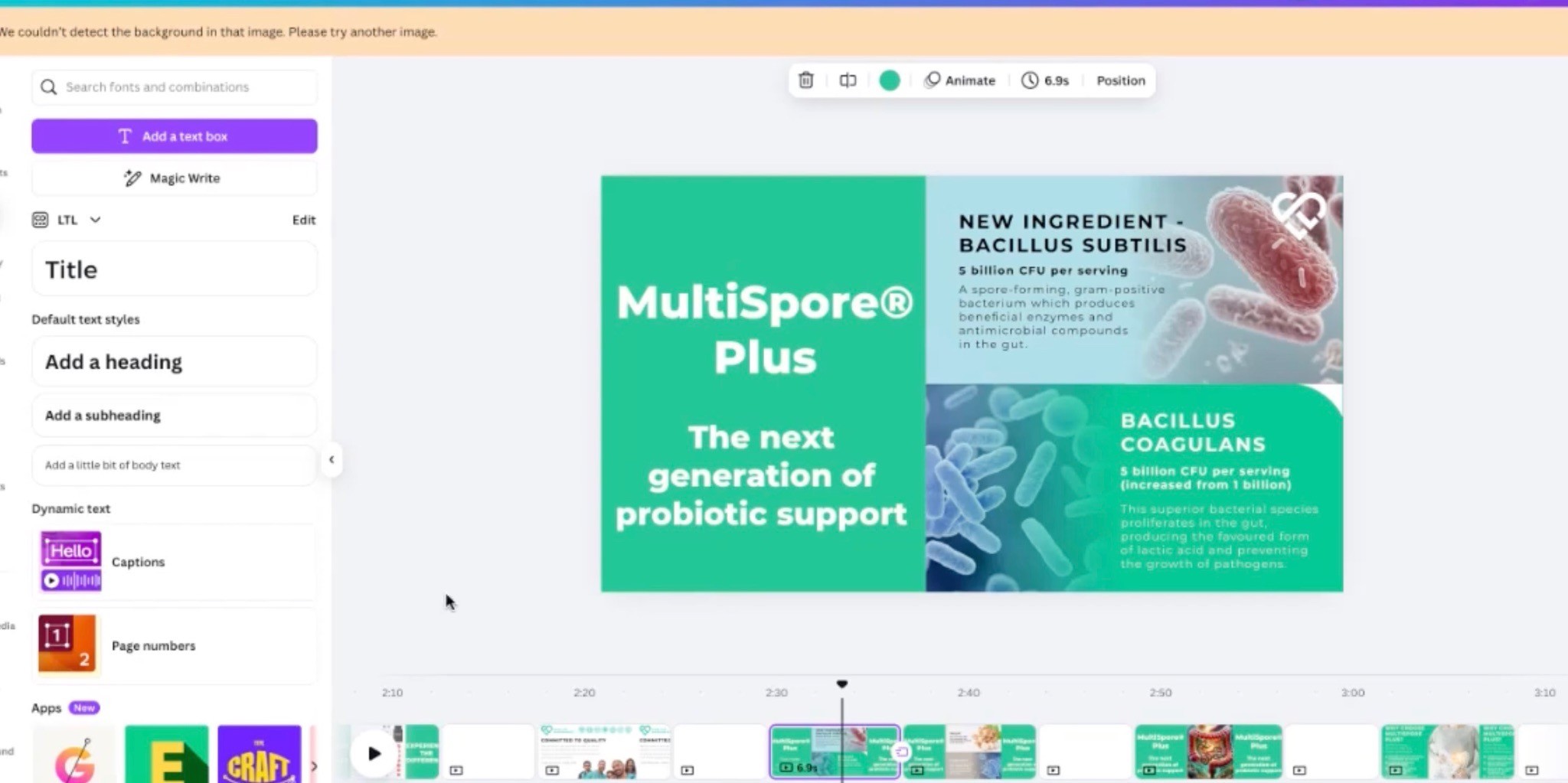
Let’s say the product is a probiotic.
The website says:
“The next generation of probiotic support.”
That is a strong headline.
Use it.
Then test visuals:
Product image
A+ Content graphic
Lifestyle image
Comparison chart
Founder photo
UGC clip
A simple 7-second still-image video with that headline might outperform a more complicated video because the message is clear.
Do not underestimate simple.
Example: Comparison-Based Supplement Ad
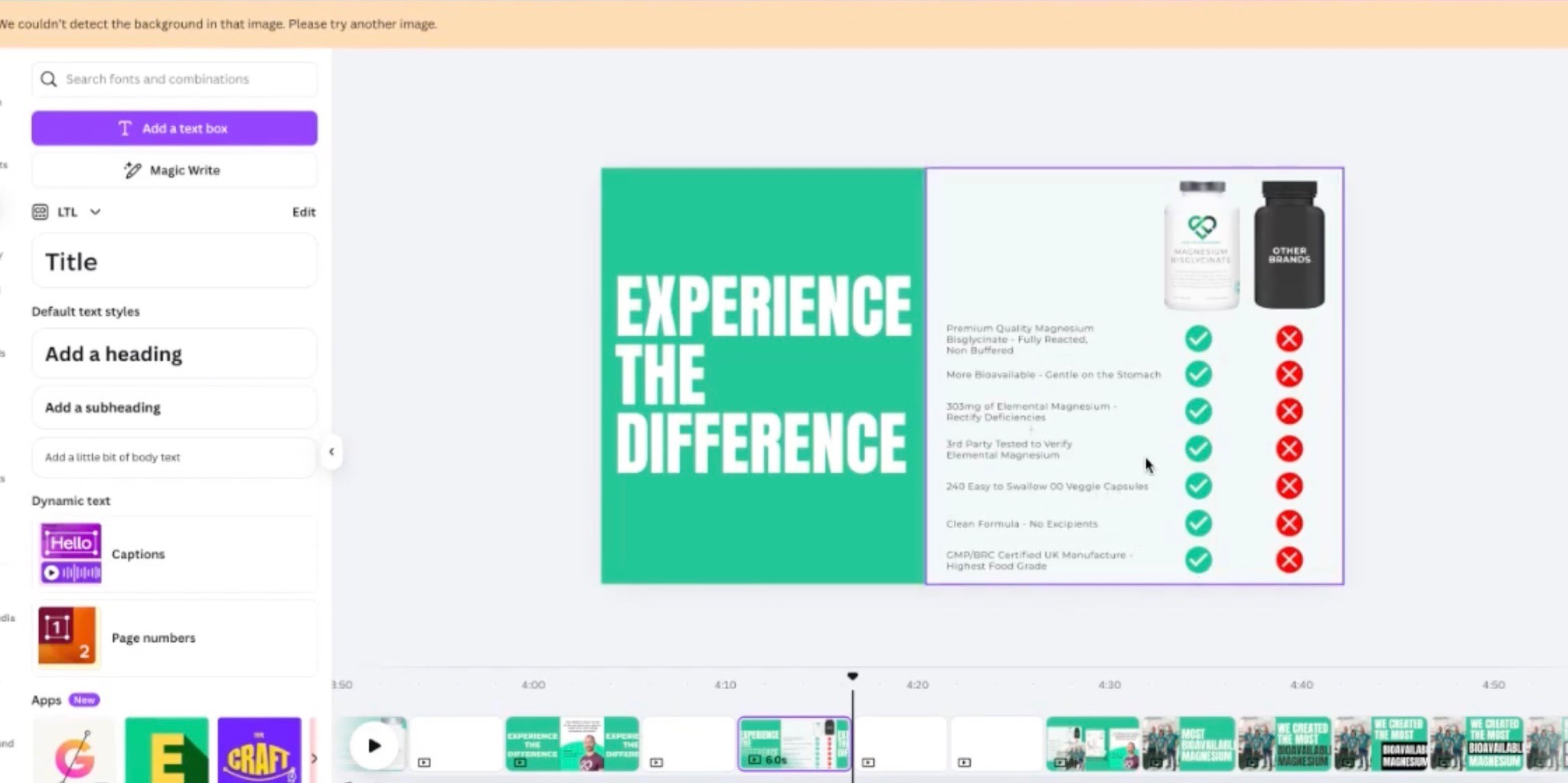
If the product has a strong comparison chart, turn it into a video ad.
The hook could be:
“Experience the Difference”
Then show the chart briefly.
Again, most shoppers will not read the entire chart.
But they will understand the visual message:
This product is different from the others.
That is often enough to earn the click.
Common Amazon Video Ad Mistakes
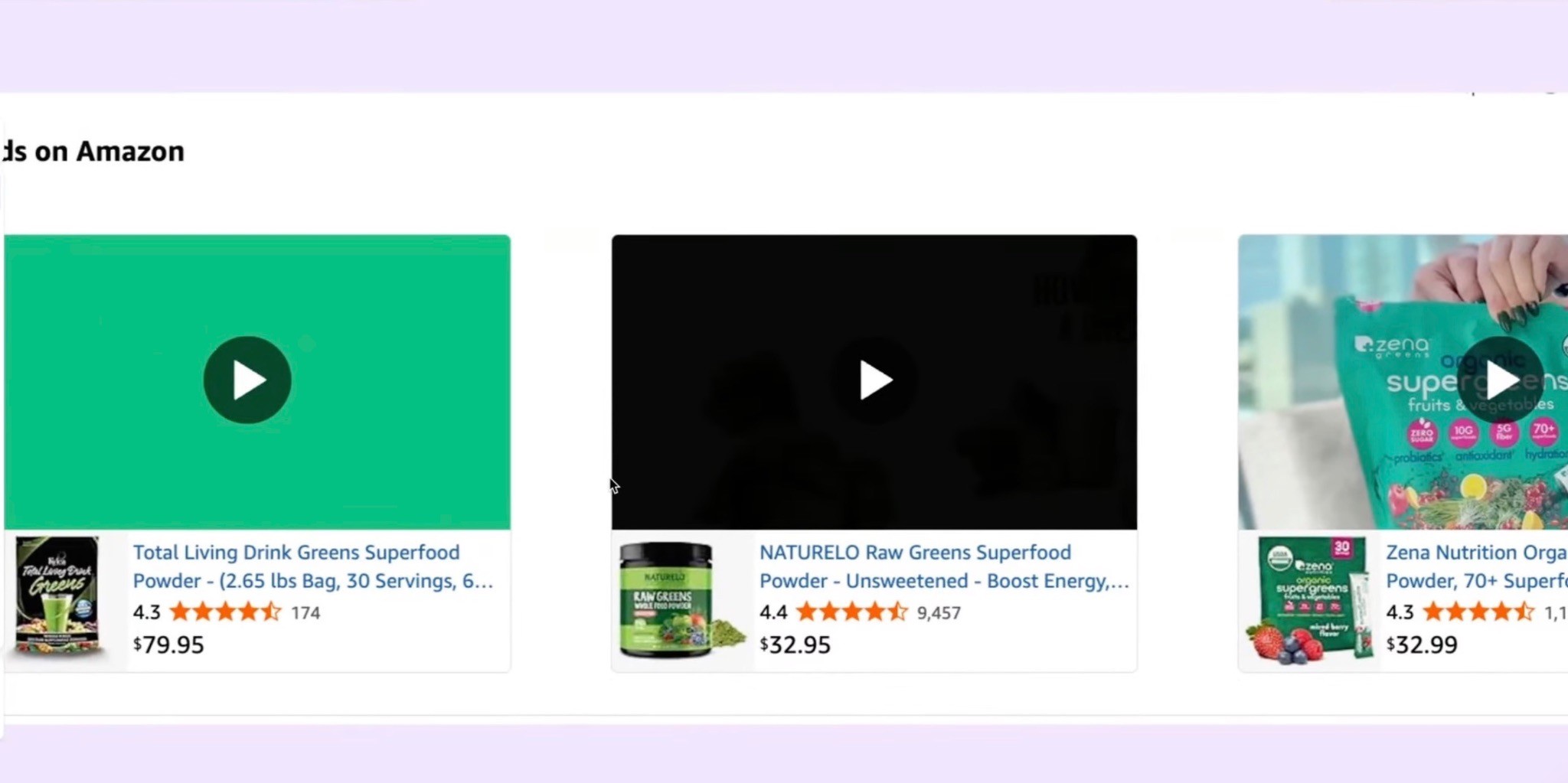
Mistake 1: Blank First Frame
This kills attention.
Never start with a blank screen or slow fade-in.
Mistake 2: Tiny Captions
Most shoppers will not read tiny text.
Use huge text.
Mistake 3: No USP
If the ad does not explain why the product is different, it is just noise.
Mistake 4: Overproducing the Wrong Thing
A fancy video with no hook is still weak.
Simple and clear beats expensive and confusing.
Mistake 5: Relying on Audio
Your video should work without sound.
Mistake 6: Trying to Sell Everything
The ad does not need to explain every feature.
Get attention and get the click.
Mistake 7: Not Testing Variations
One video is not a strategy.
Test different hooks, visuals, and formats.
Mistake 8: Ignoring the Listing
The video ad gets the click, but the listing has to convert.
If the listing is weak, fix the listing too.
Amazon Sponsored Brands Video Ads Checklist
Research
Did you read the listing?
Did you identify the main USP?
Did you check the brand website?
Did you check social content?
Did you review customer videos?
Did you study competitor ads?
Did you check the main keywords?
Creative
Is the first frame strong?
Does the first 3–5 seconds work as a thumbnail?
Is the hook clear?
Is the text huge?
Does the ad work without audio?
Is the USP obvious?
Is the visual relevant?
Is there a pattern interrupt?
Is it simple enough to understand fast?
Testing
Did you make multiple hook variations?
Did you test different visuals?
Did you test UGC if available?
Did you test comparison angles?
Did you give the PPC manager enough creative?
Are you tracking ACOS, CTR, CPC, CVR, and sales?
Listing
Does the listing support the ad?
Is the USP clear on the product page?
Are the images strong?
Is the A+ Content good?
Are reviews and rating strong enough?
Is the offer competitive?
Does the page convert after the click?
FAQ
What are Amazon Sponsored Brands video ads?
Amazon Sponsored Brands video ads are video ad placements that promote products or brands in Amazon search results and other Amazon placements. They can help get shoppers to click into your product detail page or storefront.
What is the goal of an Amazon video ad?
The main goal is to get attention and earn the click. The video ad does not need to explain everything. The product listing should do the deeper selling after the shopper clicks.
How long should an Amazon video ad be?
Many strong ads can be very short. A simple 7–15 second ad can work if the hook is clear and the visuals are strong. The first 3–5 seconds matter most.
Do Amazon video ads need audio?
No. Your ad should work without audio because many shoppers will not hear it. Use huge text and clear visuals so the message is understandable even on mute.
What should the first 3 seconds of an Amazon video ad include?
The first 3 seconds should include a strong hook, visual pattern interrupt, product use, or clear USP. Avoid blank screens, slow intros, and tiny text.
What is the billboard method for Amazon video ads?
The billboard method treats the video like a scroll-stopping billboard. It usually uses huge text on one side and a strong product, UGC, or lifestyle visual on the other side.
Should I use UGC in Amazon video ads?
Yes, if you have good UGC. Customer videos, demos, testimonials, and product-in-use clips can help the ad feel more real and engaging.
How many Amazon video ad variations should I test?
Start with at least three to five variations if budget allows. Test different hooks, visuals, formats, and comparison angles.
Can I use Canva to make Amazon video ads?
Yes. Many simple Amazon video ads can be built in Canva using still images, big text, product visuals, UGC clips, and short slide-based videos.
Summary
Amazon Sponsored Brands video ads do not need to be complicated.
They need to be clear.
The best ads get attention, communicate the USP fast, and make the shopper click.
That is it.
Do the research.
Find the USP.
Look at competitor ads.
Find the best assets.
Use huge text.
Optimize the first 3–5 seconds.
Test multiple hooks.
Use UGC if you have it.
Try comparison angles.
Keep it simple.
Then let the listing do the selling.
Because on Amazon, attention is the first win.
The click is the second win.
The listing closes the sale.
Want Help Making Amazon Video Ads That Actually Get Clicks?
If you’re looking at your Sponsored Brands video ads and thinking, “Yeah… these are probably not doing much,” no shame in that.
Most Amazon video ads are weak.
Usually, the problem is not that the brand needs a giant production budget.
The problem is the hook is not clear, the thumbnail is boring, the text is too small, or the ad is trying to say too much.
That is exactly the kind of thing we help with at AmazingCreative.
We help Amazon brands turn their product assets, UGC, website copy, comparison charts, and listing strategy into simple video ad concepts built to get attention and earn the click.
That includes Amazon video ads, main images, listing image stacks, Premium A+ Content, product photography direction, and the creative strategy behind the whole page. You can check out our Amazon SBV Video Ads Services if you want help with the full creative side.
If you want us to take a look, click the button below to book an Amazon creative strategy call and we’ll help figure out what video ad angles are actually worth testing.
Riley Bennett
Amazon Strategist, 7-Figure Seller & Founder of AmazingCreative
Riley has been selling on Amazon and working with marketplace brands since 2015. He founded AmazingCreative to help brands improve their listings through stronger creative, clearer messaging, and conversion-focused strategy.
He has worked with more than 300 brands across Amazon CRO, PPC, SEO, product launches, and marketplace growth.
Since 2015 · Trusted by 300+ Brands · 7-Figure Amazon Seller

Amazon SEO
Optimize hidden keywords, stay within Amazon’s limits & improve discoverability.

See what Premium A+ offers, how to qualify, and how to build a clear layout.

Follow Amazon’s rules and build a gallery that answers shoppers’ questions.
Book a focused CRO strategy call or start with a complimentary listing audit.