Amazon Backend Search Terms: Limits, Examples, and Optimization
Optimize hidden keywords, stay within Amazon’s limits & improve discoverability.

Amazon backend search terms are one of the most misunderstood parts of an Amazon listing.
Some sellers treat the field like a second title. Others paste in a giant keyword export, repeat the same phrase several ways, or leave it blank because they cannot find it in Seller Central.
I look at backend search terms as hidden SEO real estate.
They give you a place to add relevant language shoppers may use when that language does not belong naturally in the visible listing. Customers do not see the field, but Amazon can use it when matching products to searches.
The goal is not to cram in every keyword with search volume. It is to cover meaningful language gaps without making the title and bullets unreadable.
After working on hundreds of Amazon listings, I see the same problem constantly: brands conduct keyword research but have no system for deciding what belongs in the title, visible copy, catalog attributes, or backend.
This guide gives you that system.
Quick Answer: What Are Amazon Backend Search Terms?

Amazon backend search terms are hidden keywords entered in the Generic Keyword field for an ASIN. They can help Amazon match the product to additional relevant searches without forcing every keyword into the customer-facing copy.
For most US sellers, the practical rules are:
Use one Generic Keyword field.
Keep the complete entry within 250 bytes.
Separate words with spaces.
Do not use commas or other punctuation.
Do not repeat words.
Do not repeat information already captured in fields such as the title or brand.
Use either the singular or plural form when Amazon can handle the variation.
Skip unnecessary words such as “a,” “and,” “for,” “of,” “the,” and “with.”
Do not include brand names, ASINs, subjective claims, temporary promotions, offensive language, or irrelevant terms.
Amazon describes search terms as generic words that improve discoverability. Treat the field as a compact bank of relevant vocabulary, not a paragraph or a list of repeated exact-match phrases.
Amazon Backend Search-Term Rules
Question | Current Guidance | My Approach |
Where do terms go? | Product Details → Generic Keyword | Confirm the correct child ASIN and marketplace |
How many fields? | One | Use the first field even if “Add more” appears |
What is the limit? | 250 bytes in current US guidance | Verify with a UTF-8 byte counter |
How do I separate words? | Spaces | Do not use commas or semicolons |
Should I repeat words? | No | Deduplicate the backend and visible listing |
Singular or plural? | One is generally enough | Keep the form that reflects shopper language |
Misspellings | Common misspellings are unnecessary | Use legitimate variants and abbreviations |
Competitor brands | Prohibited | Research competitors, but never paste their brands |
Amazon interfaces and product templates change. Follow current category-specific instructions when they differ from general guidance.
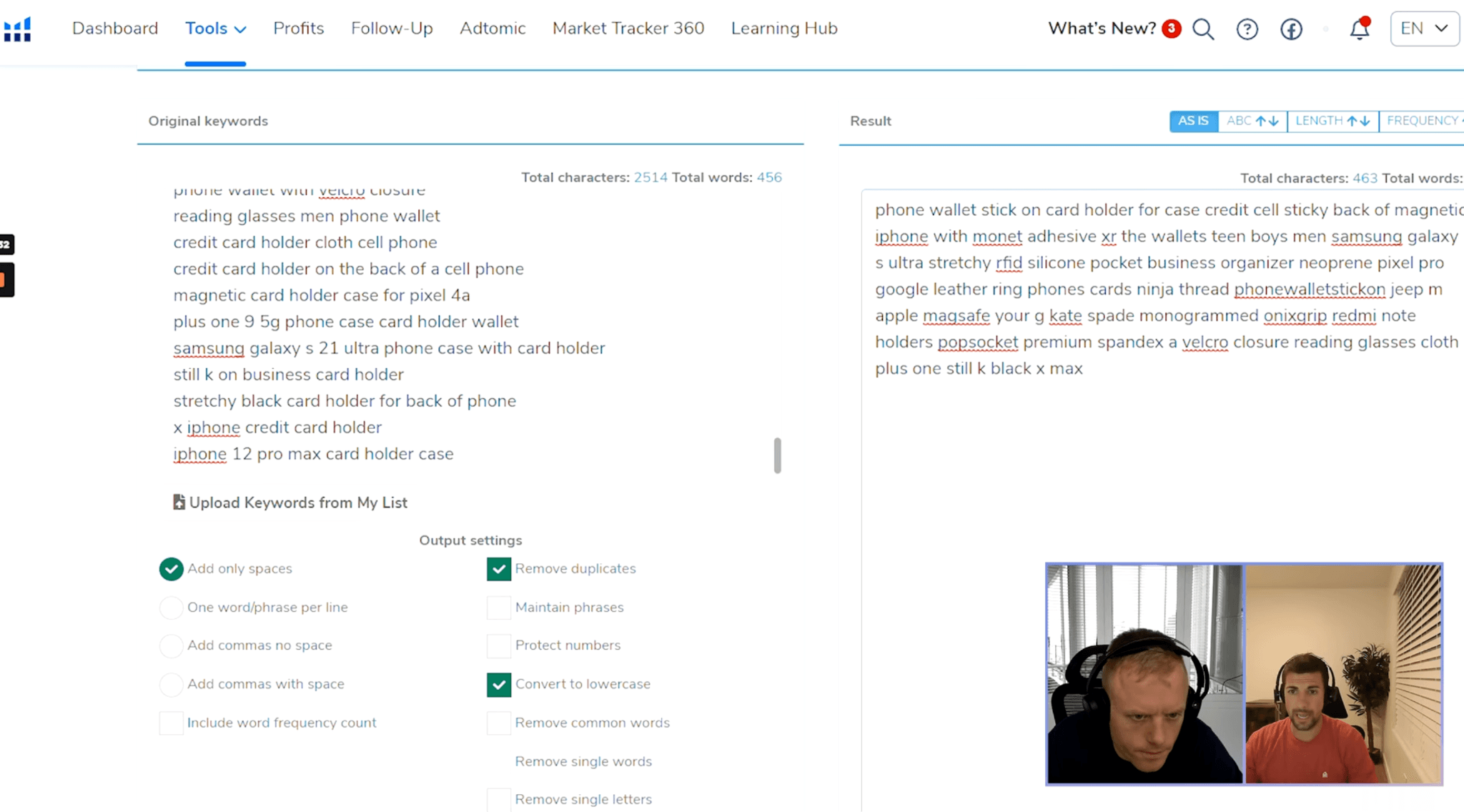
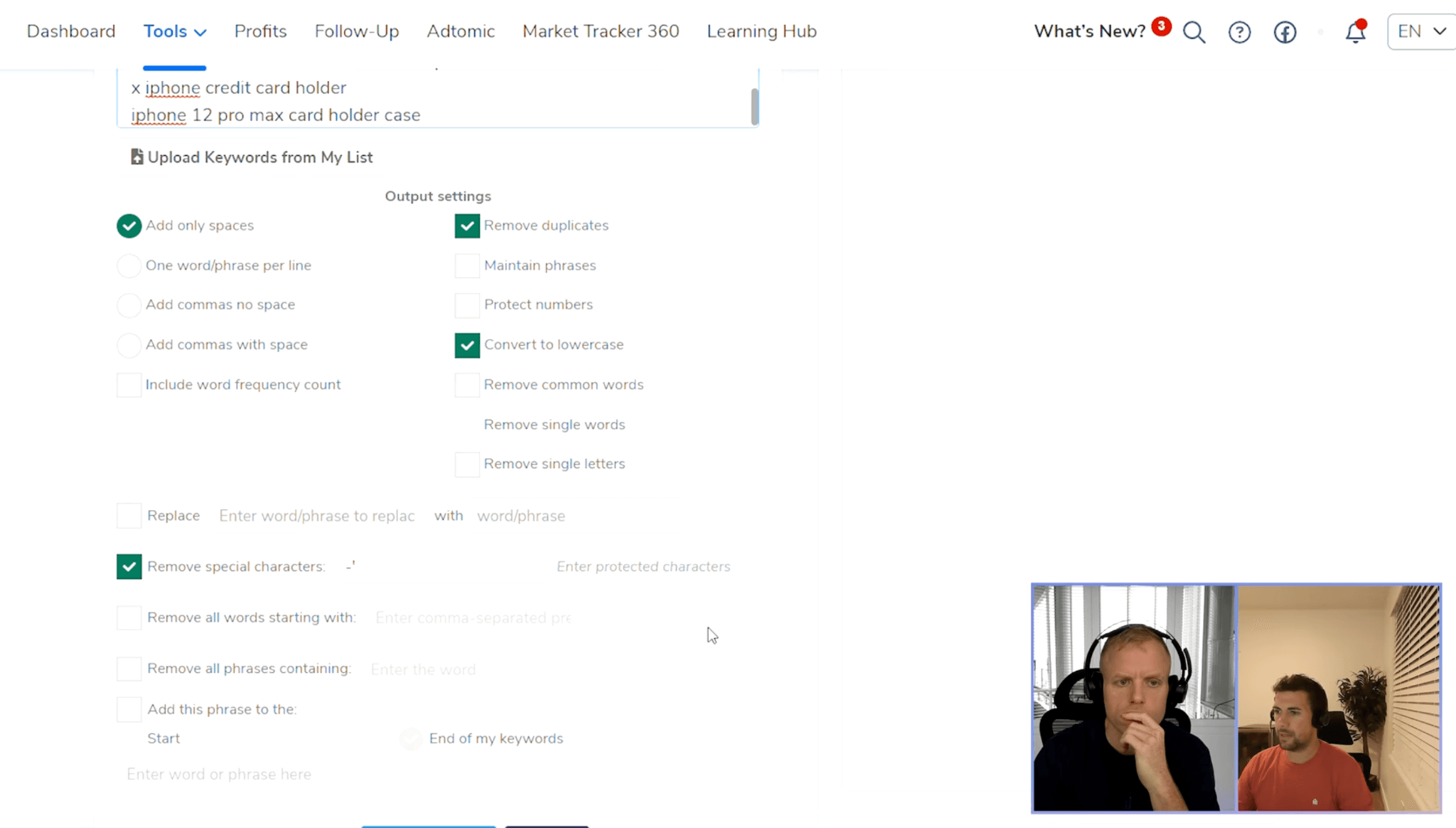
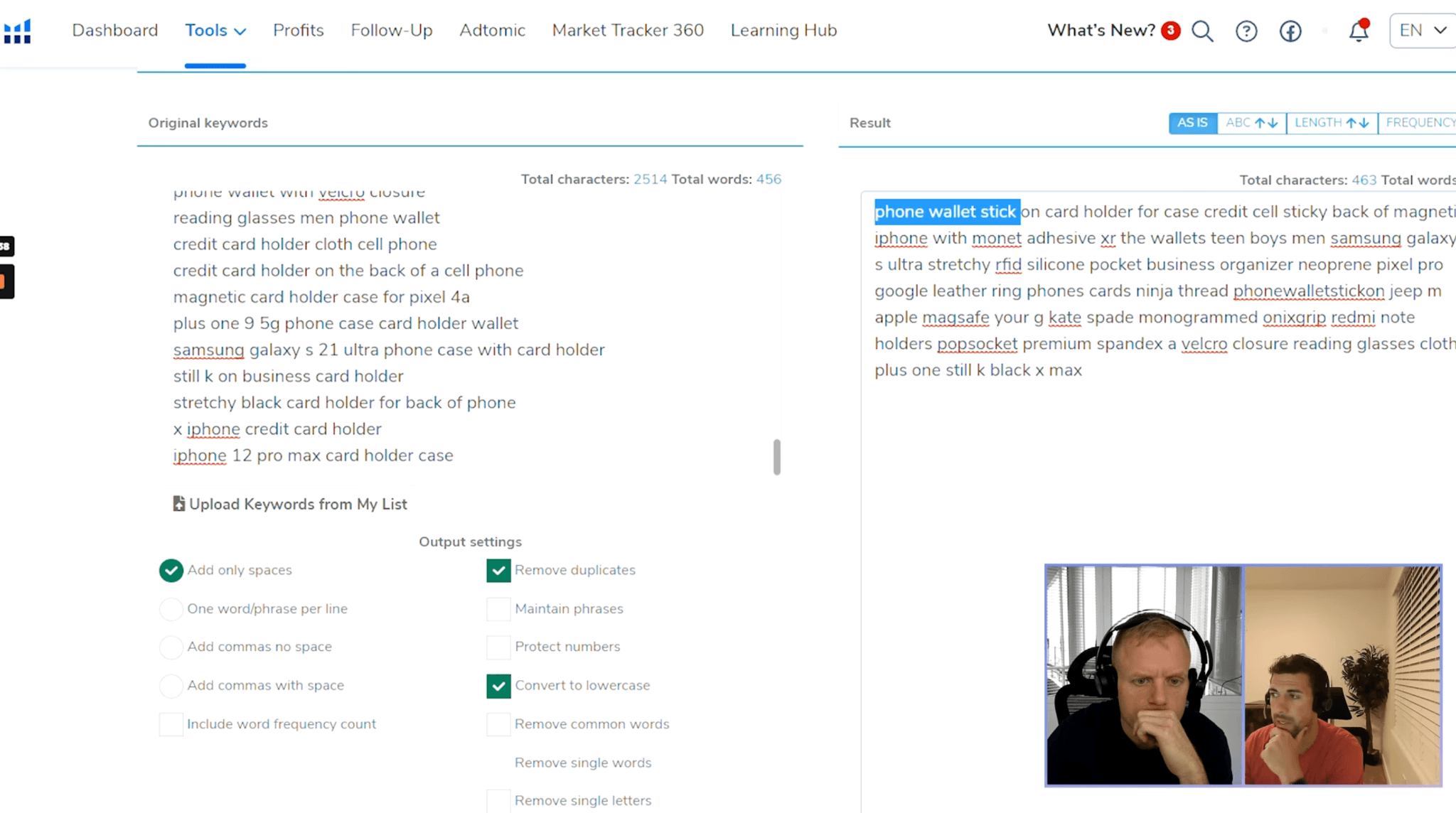
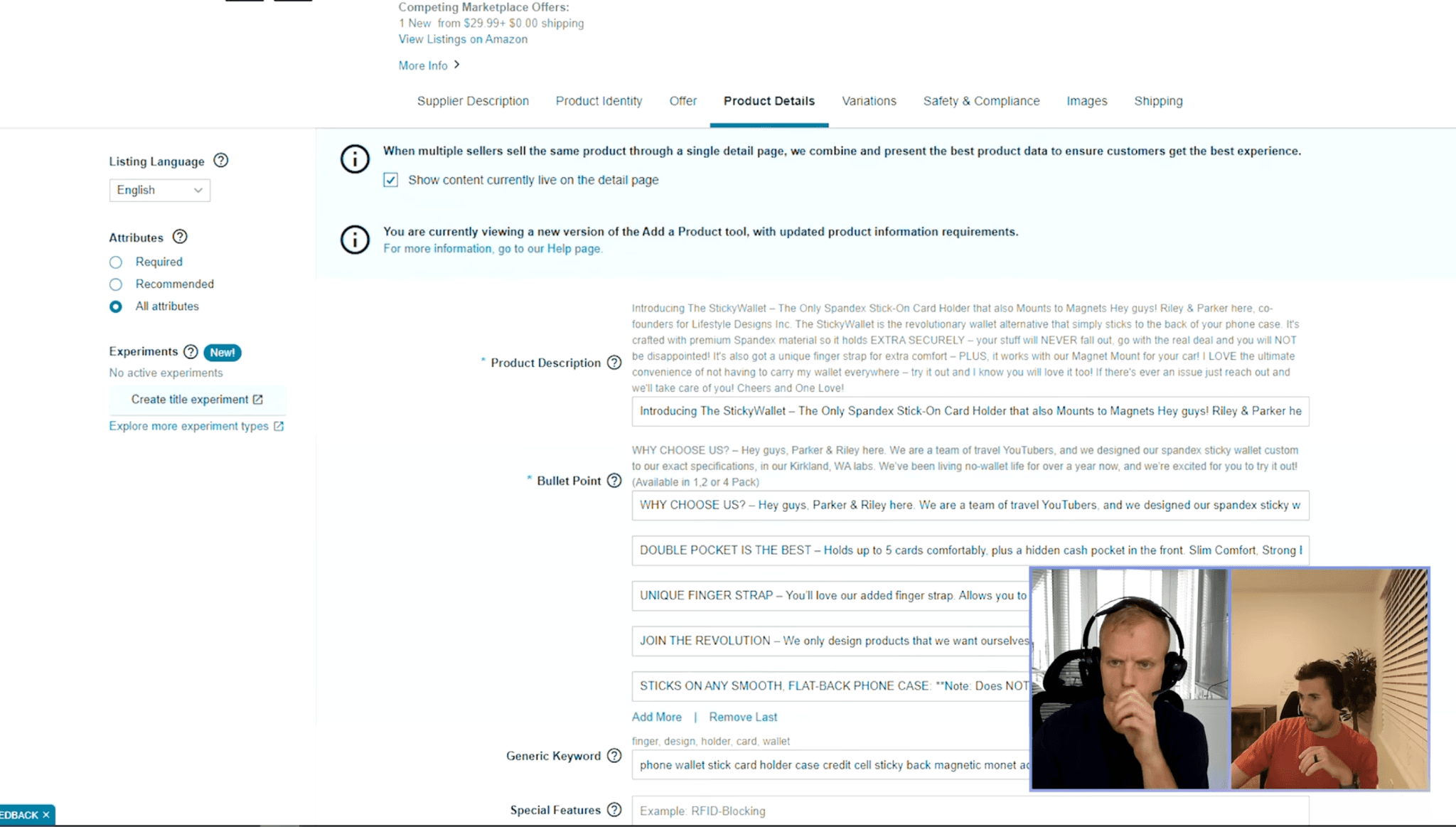
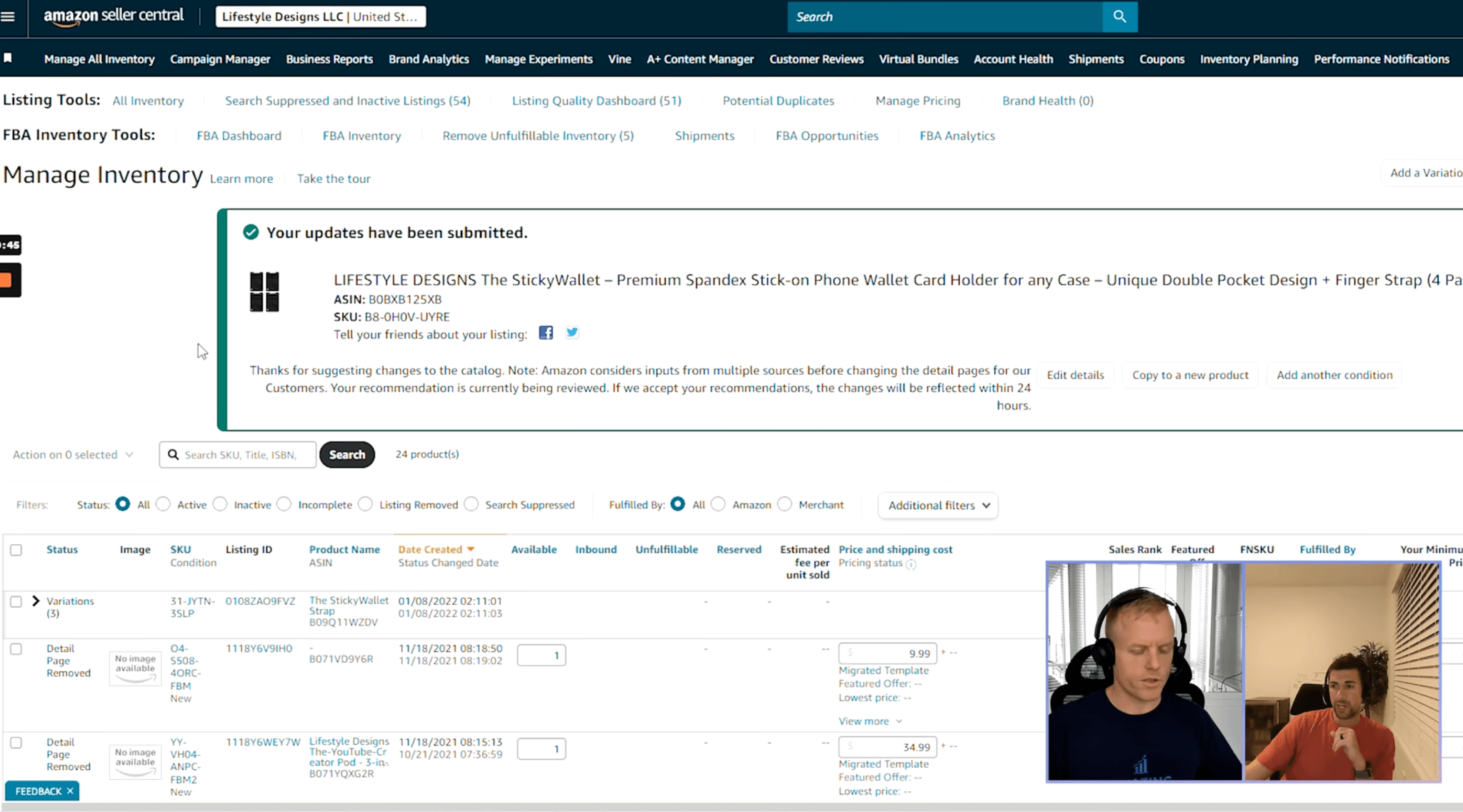
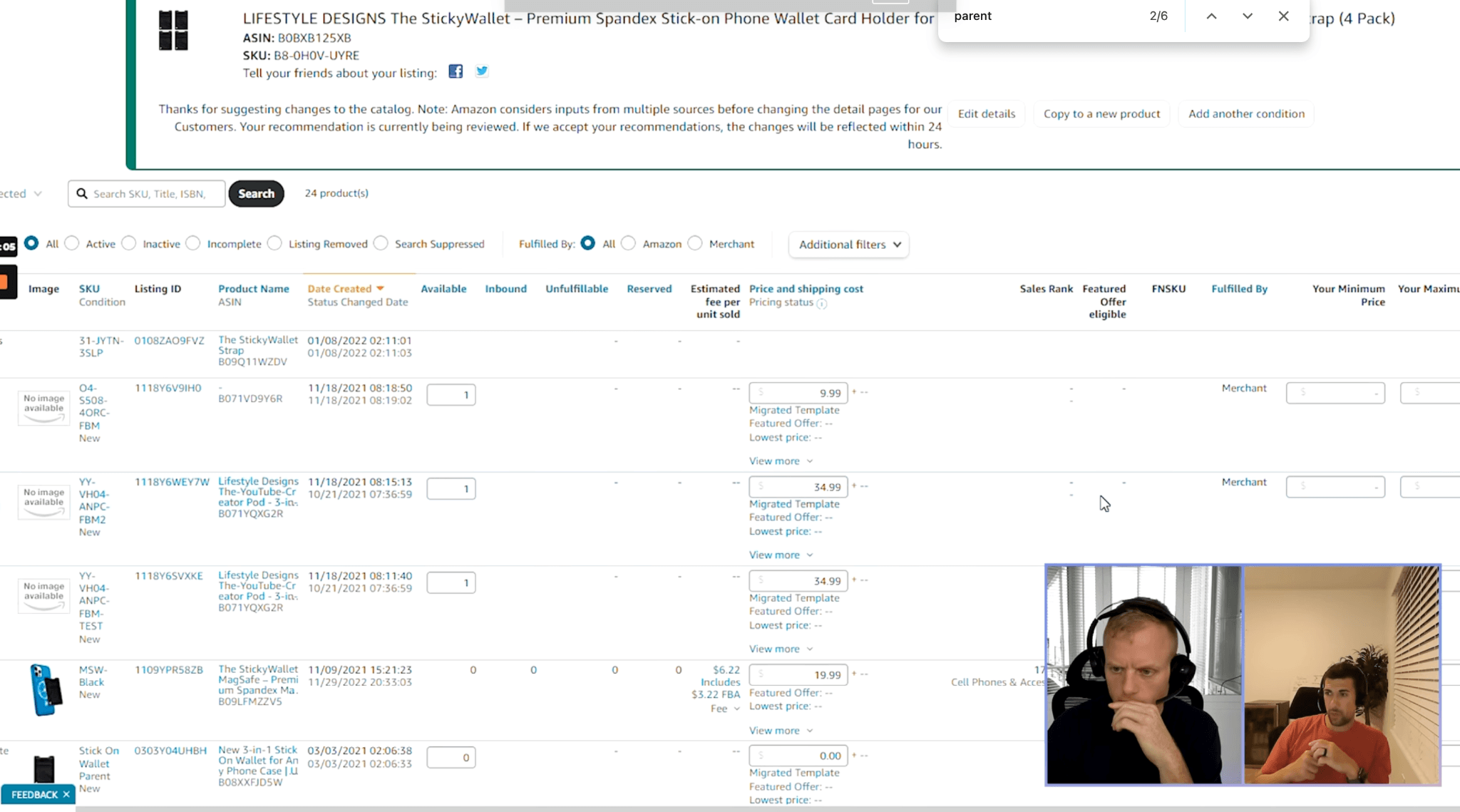
If you prefer to watch the workflow, start with my video: Amazon Backend Search Terms Ultimate Guide. It shows Ryan and me cleaning a keyword list and entering it in Seller Central. The interface and some recommendations have changed since the video was recorded, so use the current limits and compliance rules in this guide when applying the process.
Is the Limit 250 Characters or 250 Bytes?

You will see articles, videos, and Seller Central messages use “characters” and “bytes” interchangeably. They are not always the same.
Amazon’s published guidance uses a 250-byte limit.
Basic English letters and numbers normally use one byte each, which is why the allowance often looks like 250 characters. Accented letters, currency symbols, and characters from other writing systems can use multiple bytes.
My recommendation:
Treat 250 bytes as the ceiling.
Check the finished string with a UTF-8 byte counter.
Leave a little room instead of chasing the final byte.
Confirm the rule for your marketplace and product type.
The goal is not to win keyword Tetris. It is to fit the strongest unused terms into a valid field.
What Belongs in Backend Search Terms?
Synonyms and Alternate Product Names
Customers may use a different name than your brand does. A “sofa cover” may also be called a “couch protector.” A “travel tumbler” may be called a “commuter cup.”
When an alternate name is accurate and used by shoppers, it may be a strong backend candidate.
Abbreviations and Legitimate Spelling Variations
Use common abbreviations found in real search behavior, reviews, advertising data, or category research.
Amazon says common misspellings are unnecessary because its systems compensate for them. Legitimate regional spellings or accepted variants may still be useful. Do not fill the field with typos.
Relevant Use Cases, Audiences, and Attributes
Shoppers may search by use case, recipient, environment, material, style, or problem.
Examples include:
Camping
Commuting
Dorm
Travel
Senior
Compact
Insulated
Refillable
Only include words that accurately apply to the product.
Also complete dedicated Seller Central attributes. When Amazon provides material, compatibility, size, intended use, or audience fields, fill them accurately instead of asking Generic Keywords to compensate for missing catalog data.
Useful Terms That Do Not Fit Naturally in the Title
The title should identify the product clearly and earn the click. It should not read like a keyword export.
When a relevant term would make the title repetitive or awkward, the backend may be its better home. That is why SEO and conversion need to work together.
I explain the full page structure in my Amazon Listing Optimization Guide.
What Should You Leave Out?

Repeated or Redundant Words
Do not write:
dog bottle dog water bottle puppy bottle dog travel bottle
A cleaner structure is:
dog water bottle puppy travel portable hydration dispenser hiking leakproof
This demonstrates formatting only. A real list still requires product-specific research.
Amazon says information already present in fields such as the title and brand does not improve product placement.
In an older video, Ryan explained that we sometimes repeated a priority launch term in the backend. Amazon’s current recommendation is not to repeat information captured elsewhere. Today, I would follow the current guidance and use the backend to expand coverage.
Singular, Plural, Stop Words, and Punctuation
You generally do not need both “bottle” and “bottles.” Keep the form that best reflects customer language.
Remove unnecessary words such as:
A
An
And
By
For
Of
The
With
You also do not need commas, semicolons, or dashes. Spaces do the job.
Brand Names, ASINs, and Prohibited Claims
Do not include your brand, competitor brands, or ASINs. Competitor research does not give you permission to copy protected identifiers.
Amazon also identifies temporary or subjective terms such as “new,” “on sale now,” “best,” “cheapest,” and “amazing” as prohibited.
The backend is not a loophole for claims you should not make elsewhere.
Irrelevant Keywords
When a shopper would feel misled after clicking, the term does not belong.
Irrelevant visibility can bring the wrong traffic, reduce conversion, waste advertising spend, and create a poor customer experience.
Do You Need Exact Phrases or Keyword Order?
I do not treat the Generic Keyword field like exact-match PPC targeting.
You do not need every rearrangement of:
Portable dog bottle
Dog portable bottle
Travel dog water bottle
Amazon tells sellers to use spaces, avoid repetition, and skip punctuation.
My workflow is:
Research complete search phrases.
Prioritize them by relevance and demand.
Put the main phrase naturally in the title.
Use visible copy for customer-facing benefits.
Convert remaining candidates into a deduplicated word bank.
Research happens at the phrase level. Backend cleanup happens at the word level.
My Backend Search-Term Optimization Workflow
1. Build a Master Keyword List

Pull keywords from multiple sources:
Amazon autocomplete
Brand Analytics and Search Query Performance, when available
PPC search-term reports
Customer reviews and questions
Competitor positioning and catalog attributes
A reputable Amazon keyword-research tool
Search volume matters, but relevance comes first. A high-volume term for a different product is noise.
2. Score and Map the Terms
Ryan and I have demonstrated a scoring system where only stronger candidates enter the backend workflow.
Whatever model you use, ask:
Does it accurately describe the product?
Does it match shopper intent?
Is it already covered elsewhere?
Does Amazon provide a dedicated attribute?
Is it compliant?
Then map each group:
Keyword Group | Best Destination |
Primary product phrase | Title, when natural |
Essential product identity | Title and catalog attributes |
Customer-facing benefits | Bullets and gallery |
Materials, size, and compatibility | Dedicated attributes |
Synonyms and alternate names | Generic Keyword field |
Competitor brands and ASINs | Nowhere |
I protect the strongest terms first in my working document because it makes editing easier, not because Amazon publicly promises greater weight to earlier backend words.
3. Clean the List
Remove:
Repeated words and phrase combinations
Obvious singular and plural duplicates
Words already captured in applicable visible fields
Punctuation and stop words
Irrelevant terms and common misspellings
Brands, ASINs, promotions, and subjective claims
Tools such as Helium 10 Keyword Processor can remove duplicates mechanically, but always review the output. A tool cannot judge product relevance or compliance for you.
4. Check Bytes and Upload

Use a UTF-8 byte counter and remove the weakest terms when needed.
Then enter the string in:
Inventory → Manage All Inventory → Edit → Product Details → Generic Keyword
Older tutorials may show a separate Keywords tab.
When you cannot find the field:
Confirm the marketplace and ASIN.
Search Product Details for “generic.”
Check the product-type spreadsheet.
Contact Seller Support.
Amazon moderators currently advise using one Generic Keyword field even when “Add more” appears.
5. Verify and Measure

Return to the editor and confirm the value saved.
Then monitor:
Search Query Performance
Brand Analytics
Organic ranking trends
PPC impressions, clicks, and conversions
Business reports and conversion rate
Listing warnings or suppression
Amazon does not publish a universal indexing-time guarantee for every category and marketplace. Allow processing time, then diagnose methodically.
Do not treat one manual search as definitive proof. Results can vary by shopper, location, device, history, and other factors.
Amazon Backend Search-Term Example
Imagine a stainless-steel dog water bottle. Its title already includes:
BrandName Stainless Steel Dog Water Bottle, Leakproof Portable Pet Dispenser
A weak backend entry:
BrandName best dog water bottle dog bottle for dogs stainless steel dog water bottle portable dog water bottle puppy water bottle ASIN123
It repeats title words and phrases, includes a brand and subjective claim, uses an ASIN-style identifier, and wastes space.
A cleaner working example:
puppy canine hydration flask travel walking hiking outdoor bowl feeder accessory compact reusable
Before using any term, confirm that it:
Describes the actual product
Is supported by research
Is not already captured elsewhere
Follows the category rules
The structure is the lesson: relevant unique words, no filler, and no policy games.
How Variations Affect Backend Terms

A parent listing groups child ASINs. The children are the purchasable products.
I do not rely on a parent-only keyword update as a universal SEO strategy.
My approach:
Make sure each relevant child has accurate data.
Use common backend terms where they apply across the family.
Add child-specific language only where accurate.
Put colors, sizes, flavors, and models in dedicated variation attributes when available.
Confirm which values saved.
Our older video showed some apparel parent updates appearing to flow to children, while other families required individual edits or spreadsheets.
Treat that as historical experience, not a permanent cross-category rule.
Amazon changes templates and attribute behavior. Check the current product-type template and verify the child records.
Research Competitors Without Copying Them

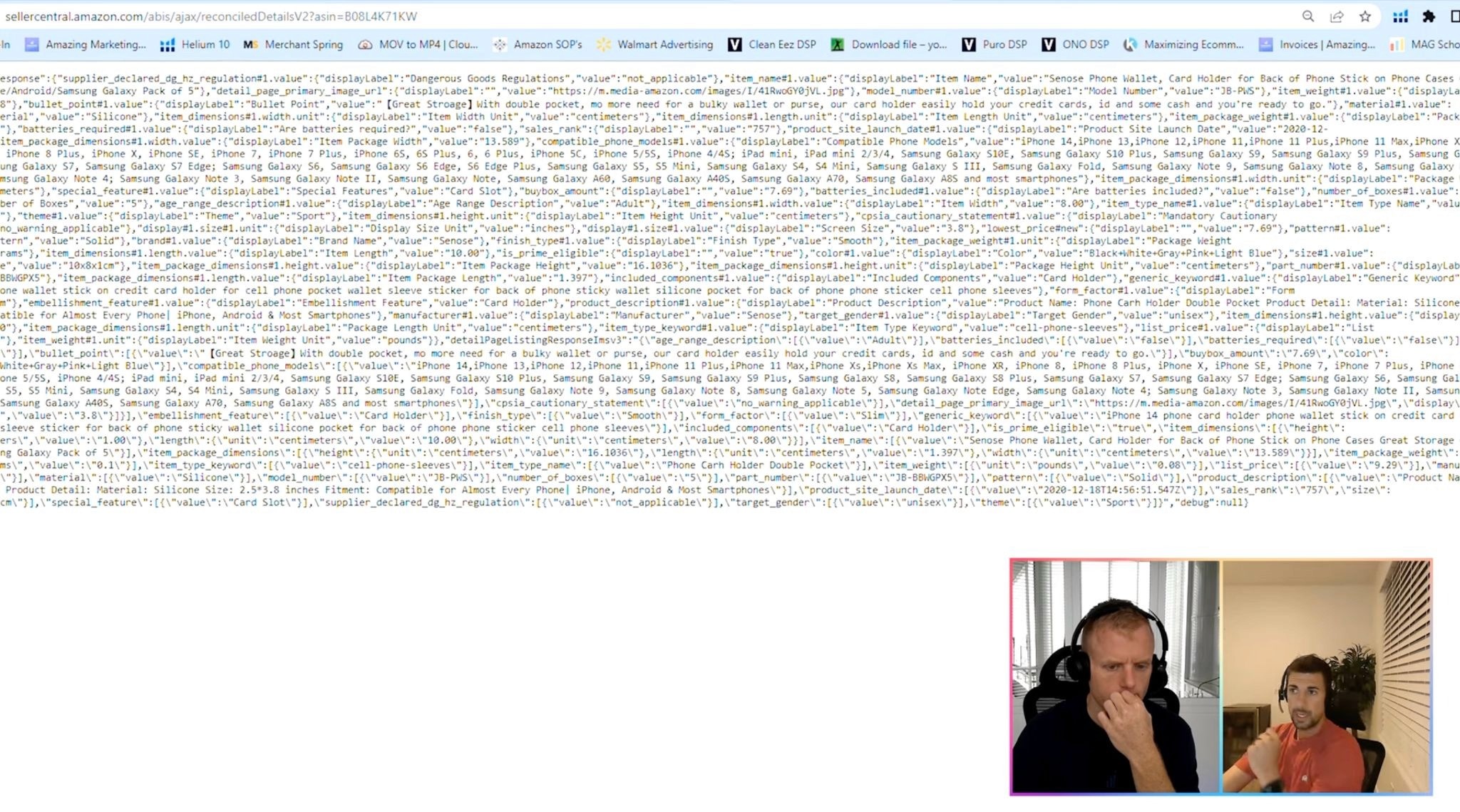
Ryan and I demonstrated an AJAX report workflow for studying catalog attributes such as:
Form factor
Compatible models
Materials
Keyword patterns
The strategic lesson still matters: competitors can reveal category language and attributes you forgot to research.
However, an old endpoint may change or disappear.
Prefer stable inputs such as:
Live detail pages
Category filters
Brand Analytics
Product Opportunity Explorer
Advertising reports
Reviews and questions
Current product-type templates
When AI organizes the research, use it as a formatter, not the source of truth. Verify every attribute against the real product.
Never copy competitor brands, ASINs, unsupported claims, or inaccurate compatibility terms.
Common Backend Keyword Mistakes
Filling the field before researching
Repeating the title or the same words
Counting characters instead of bytes
Using commas and repeated phrases
Copying competitor brands
Ignoring dedicated catalog attributes
Adding irrelevant high-volume keywords
Assuming every variation inherits parent data
Following an outdated Seller Central interface
Uploading once and never measuring performance
Amazon Backend Search-Term Checklist
Every term accurately describes the product.
I prioritized relevance before search volume.
The primary phrase is handled naturally in the title.
Structured attributes are complete.
The backend covers useful language gaps.
I removed repeated and redundant words.
I removed plural duplication, punctuation, and stop words.
I removed brands, ASINs, subjective claims, and irrelevant terms.
The entry is within 250 bytes for the marketplace.
I edited the correct child ASIN and confirmed the value saved.
I documented the change and will monitor performance.
Frequently Asked Questions
What Is the Amazon Backend Search-Term Limit?
Current US guidance limits the Generic Keyword entry to 250 bytes.
Basic English characters normally use one byte each, but other characters may use multiple bytes. Confirm the marketplace rule.
Where Do I Add Amazon Backend Keywords?
Go to:
Inventory → Manage All Inventory → Edit → Product Details → Generic Keyword
Check the category template or contact Seller Support when the field is unavailable.
Should I Use Commas or Repeat Title Keywords?
No.
Amazon advises using spaces and says redundant information already captured in fields such as the title or brand does not improve placement.
Do I Need Singular and Plural Forms?
Amazon advises using one rather than both.
Use the recovered space for another relevant concept.
Should I Include Misspellings?
Amazon says common misspellings are unnecessary.
Legitimate spelling variations and abbreviations may still be useful when relevant.
Can I Use Competitor Brand Names?
No.
Amazon says not to include your brand or other brands in Generic Keywords.
How Long Does Indexing Take?
Amazon does not provide one universal public guarantee for every edit, category, and marketplace.
Confirm the data saved, allow processing time, and monitor multiple data sources.
Do I Edit the Parent or Child Variations?
Do not assume a parent-only update covers every child.
Make sure purchasable child ASINs contain accurate data and verify what saved.
Final Takeaway
Give backend search terms one clear job:
Cover relevant customer language that does not belong naturally somewhere else.
Start with real research. Put the primary phrase in the title, complete structured attributes, protect the readability of visible copy, and use the backend for strong synonyms, alternate names, abbreviations, and secondary use cases.
Then clean the field aggressively:
No repetition
No filler
No punctuation
No brands
No ASINs
No misleading terms
Stay within the byte limit, confirm the terms saved, and measure what happens.
Backend SEO should make the listing easier for Amazon to understand without making it harder for a human to read.
To have our team handle keyword research, mapping, copy, gallery strategy, and backend setup, see our Amazon Listing Optimization service.
When the listing receives traffic but does not convert enough of it, read my Amazon Conversion Rate Optimization Guide.
Amazon Backend Search Terms: Limits, Examples, and Optimization
Optimize hidden keywords, stay within Amazon’s limits & improve discoverability.

Amazon backend search terms are one of the most misunderstood parts of an Amazon listing.
Some sellers treat the field like a second title. Others paste in a giant keyword export, repeat the same phrase several ways, or leave it blank because they cannot find it in Seller Central.
I look at backend search terms as hidden SEO real estate.
They give you a place to add relevant language shoppers may use when that language does not belong naturally in the visible listing. Customers do not see the field, but Amazon can use it when matching products to searches.
The goal is not to cram in every keyword with search volume. It is to cover meaningful language gaps without making the title and bullets unreadable.
After working on hundreds of Amazon listings, I see the same problem constantly: brands conduct keyword research but have no system for deciding what belongs in the title, visible copy, catalog attributes, or backend.
This guide gives you that system.
Quick Answer: What Are Amazon Backend Search Terms?

Amazon backend search terms are hidden keywords entered in the Generic Keyword field for an ASIN. They can help Amazon match the product to additional relevant searches without forcing every keyword into the customer-facing copy.
For most US sellers, the practical rules are:
Use one Generic Keyword field.
Keep the complete entry within 250 bytes.
Separate words with spaces.
Do not use commas or other punctuation.
Do not repeat words.
Do not repeat information already captured in fields such as the title or brand.
Use either the singular or plural form when Amazon can handle the variation.
Skip unnecessary words such as “a,” “and,” “for,” “of,” “the,” and “with.”
Do not include brand names, ASINs, subjective claims, temporary promotions, offensive language, or irrelevant terms.
Amazon describes search terms as generic words that improve discoverability. Treat the field as a compact bank of relevant vocabulary, not a paragraph or a list of repeated exact-match phrases.
Amazon Backend Search-Term Rules
Question | Current Guidance | My Approach |
Where do terms go? | Product Details → Generic Keyword | Confirm the correct child ASIN and marketplace |
How many fields? | One | Use the first field even if “Add more” appears |
What is the limit? | 250 bytes in current US guidance | Verify with a UTF-8 byte counter |
How do I separate words? | Spaces | Do not use commas or semicolons |
Should I repeat words? | No | Deduplicate the backend and visible listing |
Singular or plural? | One is generally enough | Keep the form that reflects shopper language |
Misspellings | Common misspellings are unnecessary | Use legitimate variants and abbreviations |
Competitor brands | Prohibited | Research competitors, but never paste their brands |
Amazon interfaces and product templates change. Follow current category-specific instructions when they differ from general guidance.
If you prefer to watch the workflow, start with my video: Amazon Backend Search Terms Ultimate Guide. It shows Ryan and me cleaning a keyword list and entering it in Seller Central. The interface and some recommendations have changed since the video was recorded, so use the current limits and compliance rules in this guide when applying the process.
Is the Limit 250 Characters or 250 Bytes?

You will see articles, videos, and Seller Central messages use “characters” and “bytes” interchangeably. They are not always the same.
Amazon’s published guidance uses a 250-byte limit.
Basic English letters and numbers normally use one byte each, which is why the allowance often looks like 250 characters. Accented letters, currency symbols, and characters from other writing systems can use multiple bytes.
My recommendation:
Treat 250 bytes as the ceiling.
Check the finished string with a UTF-8 byte counter.
Leave a little room instead of chasing the final byte.
Confirm the rule for your marketplace and product type.
The goal is not to win keyword Tetris. It is to fit the strongest unused terms into a valid field.
What Belongs in Backend Search Terms?
Synonyms and Alternate Product Names
Customers may use a different name than your brand does. A “sofa cover” may also be called a “couch protector.” A “travel tumbler” may be called a “commuter cup.”
When an alternate name is accurate and used by shoppers, it may be a strong backend candidate.
Abbreviations and Legitimate Spelling Variations
Use common abbreviations found in real search behavior, reviews, advertising data, or category research.
Amazon says common misspellings are unnecessary because its systems compensate for them. Legitimate regional spellings or accepted variants may still be useful. Do not fill the field with typos.
Relevant Use Cases, Audiences, and Attributes
Shoppers may search by use case, recipient, environment, material, style, or problem.
Examples include:
Camping
Commuting
Dorm
Travel
Senior
Compact
Insulated
Refillable
Only include words that accurately apply to the product.
Also complete dedicated Seller Central attributes. When Amazon provides material, compatibility, size, intended use, or audience fields, fill them accurately instead of asking Generic Keywords to compensate for missing catalog data.
Useful Terms That Do Not Fit Naturally in the Title
The title should identify the product clearly and earn the click. It should not read like a keyword export.
When a relevant term would make the title repetitive or awkward, the backend may be its better home. That is why SEO and conversion need to work together.
I explain the full page structure in my Amazon Listing Optimization Guide.
What Should You Leave Out?

Repeated or Redundant Words
Do not write:
dog bottle dog water bottle puppy bottle dog travel bottle
A cleaner structure is:
dog water bottle puppy travel portable hydration dispenser hiking leakproof
This demonstrates formatting only. A real list still requires product-specific research.
Amazon says information already present in fields such as the title and brand does not improve product placement.
In an older video, Ryan explained that we sometimes repeated a priority launch term in the backend. Amazon’s current recommendation is not to repeat information captured elsewhere. Today, I would follow the current guidance and use the backend to expand coverage.
Singular, Plural, Stop Words, and Punctuation
You generally do not need both “bottle” and “bottles.” Keep the form that best reflects customer language.
Remove unnecessary words such as:
A
An
And
By
For
Of
The
With
You also do not need commas, semicolons, or dashes. Spaces do the job.
Brand Names, ASINs, and Prohibited Claims
Do not include your brand, competitor brands, or ASINs. Competitor research does not give you permission to copy protected identifiers.
Amazon also identifies temporary or subjective terms such as “new,” “on sale now,” “best,” “cheapest,” and “amazing” as prohibited.
The backend is not a loophole for claims you should not make elsewhere.
Irrelevant Keywords
When a shopper would feel misled after clicking, the term does not belong.
Irrelevant visibility can bring the wrong traffic, reduce conversion, waste advertising spend, and create a poor customer experience.
Do You Need Exact Phrases or Keyword Order?
I do not treat the Generic Keyword field like exact-match PPC targeting.
You do not need every rearrangement of:
Portable dog bottle
Dog portable bottle
Travel dog water bottle
Amazon tells sellers to use spaces, avoid repetition, and skip punctuation.
My workflow is:
Research complete search phrases.
Prioritize them by relevance and demand.
Put the main phrase naturally in the title.
Use visible copy for customer-facing benefits.
Convert remaining candidates into a deduplicated word bank.
Research happens at the phrase level. Backend cleanup happens at the word level.
My Backend Search-Term Optimization Workflow
1. Build a Master Keyword List

Pull keywords from multiple sources:
Amazon autocomplete
Brand Analytics and Search Query Performance, when available
PPC search-term reports
Customer reviews and questions
Competitor positioning and catalog attributes
A reputable Amazon keyword-research tool
Search volume matters, but relevance comes first. A high-volume term for a different product is noise.
2. Score and Map the Terms
Ryan and I have demonstrated a scoring system where only stronger candidates enter the backend workflow.
Whatever model you use, ask:
Does it accurately describe the product?
Does it match shopper intent?
Is it already covered elsewhere?
Does Amazon provide a dedicated attribute?
Is it compliant?
Then map each group:
Keyword Group | Best Destination |
Primary product phrase | Title, when natural |
Essential product identity | Title and catalog attributes |
Customer-facing benefits | Bullets and gallery |
Materials, size, and compatibility | Dedicated attributes |
Synonyms and alternate names | Generic Keyword field |
Competitor brands and ASINs | Nowhere |
I protect the strongest terms first in my working document because it makes editing easier, not because Amazon publicly promises greater weight to earlier backend words.
3. Clean the List
Remove:
Repeated words and phrase combinations
Obvious singular and plural duplicates
Words already captured in applicable visible fields
Punctuation and stop words
Irrelevant terms and common misspellings
Brands, ASINs, promotions, and subjective claims
Tools such as Helium 10 Keyword Processor can remove duplicates mechanically, but always review the output. A tool cannot judge product relevance or compliance for you.
4. Check Bytes and Upload

Use a UTF-8 byte counter and remove the weakest terms when needed.
Then enter the string in:
Inventory → Manage All Inventory → Edit → Product Details → Generic Keyword
Older tutorials may show a separate Keywords tab.
When you cannot find the field:
Confirm the marketplace and ASIN.
Search Product Details for “generic.”
Check the product-type spreadsheet.
Contact Seller Support.
Amazon moderators currently advise using one Generic Keyword field even when “Add more” appears.
5. Verify and Measure

Return to the editor and confirm the value saved.
Then monitor:
Search Query Performance
Brand Analytics
Organic ranking trends
PPC impressions, clicks, and conversions
Business reports and conversion rate
Listing warnings or suppression
Amazon does not publish a universal indexing-time guarantee for every category and marketplace. Allow processing time, then diagnose methodically.
Do not treat one manual search as definitive proof. Results can vary by shopper, location, device, history, and other factors.
Amazon Backend Search-Term Example
Imagine a stainless-steel dog water bottle. Its title already includes:
BrandName Stainless Steel Dog Water Bottle, Leakproof Portable Pet Dispenser
A weak backend entry:
BrandName best dog water bottle dog bottle for dogs stainless steel dog water bottle portable dog water bottle puppy water bottle ASIN123
It repeats title words and phrases, includes a brand and subjective claim, uses an ASIN-style identifier, and wastes space.
A cleaner working example:
puppy canine hydration flask travel walking hiking outdoor bowl feeder accessory compact reusable
Before using any term, confirm that it:
Describes the actual product
Is supported by research
Is not already captured elsewhere
Follows the category rules
The structure is the lesson: relevant unique words, no filler, and no policy games.
How Variations Affect Backend Terms

A parent listing groups child ASINs. The children are the purchasable products.
I do not rely on a parent-only keyword update as a universal SEO strategy.
My approach:
Make sure each relevant child has accurate data.
Use common backend terms where they apply across the family.
Add child-specific language only where accurate.
Put colors, sizes, flavors, and models in dedicated variation attributes when available.
Confirm which values saved.
Our older video showed some apparel parent updates appearing to flow to children, while other families required individual edits or spreadsheets.
Treat that as historical experience, not a permanent cross-category rule.
Amazon changes templates and attribute behavior. Check the current product-type template and verify the child records.
Research Competitors Without Copying Them

Ryan and I demonstrated an AJAX report workflow for studying catalog attributes such as:
Form factor
Compatible models
Materials
Keyword patterns
The strategic lesson still matters: competitors can reveal category language and attributes you forgot to research.
However, an old endpoint may change or disappear.
Prefer stable inputs such as:
Live detail pages
Category filters
Brand Analytics
Product Opportunity Explorer
Advertising reports
Reviews and questions
Current product-type templates
When AI organizes the research, use it as a formatter, not the source of truth. Verify every attribute against the real product.
Never copy competitor brands, ASINs, unsupported claims, or inaccurate compatibility terms.
Common Backend Keyword Mistakes
Filling the field before researching
Repeating the title or the same words
Counting characters instead of bytes
Using commas and repeated phrases
Copying competitor brands
Ignoring dedicated catalog attributes
Adding irrelevant high-volume keywords
Assuming every variation inherits parent data
Following an outdated Seller Central interface
Uploading once and never measuring performance
Amazon Backend Search-Term Checklist
Every term accurately describes the product.
I prioritized relevance before search volume.
The primary phrase is handled naturally in the title.
Structured attributes are complete.
The backend covers useful language gaps.
I removed repeated and redundant words.
I removed plural duplication, punctuation, and stop words.
I removed brands, ASINs, subjective claims, and irrelevant terms.
The entry is within 250 bytes for the marketplace.
I edited the correct child ASIN and confirmed the value saved.
I documented the change and will monitor performance.
Frequently Asked Questions
What Is the Amazon Backend Search-Term Limit?
Current US guidance limits the Generic Keyword entry to 250 bytes.
Basic English characters normally use one byte each, but other characters may use multiple bytes. Confirm the marketplace rule.
Where Do I Add Amazon Backend Keywords?
Go to:
Inventory → Manage All Inventory → Edit → Product Details → Generic Keyword
Check the category template or contact Seller Support when the field is unavailable.
Should I Use Commas or Repeat Title Keywords?
No.
Amazon advises using spaces and says redundant information already captured in fields such as the title or brand does not improve placement.
Do I Need Singular and Plural Forms?
Amazon advises using one rather than both.
Use the recovered space for another relevant concept.
Should I Include Misspellings?
Amazon says common misspellings are unnecessary.
Legitimate spelling variations and abbreviations may still be useful when relevant.
Can I Use Competitor Brand Names?
No.
Amazon says not to include your brand or other brands in Generic Keywords.
How Long Does Indexing Take?
Amazon does not provide one universal public guarantee for every edit, category, and marketplace.
Confirm the data saved, allow processing time, and monitor multiple data sources.
Do I Edit the Parent or Child Variations?
Do not assume a parent-only update covers every child.
Make sure purchasable child ASINs contain accurate data and verify what saved.
Final Takeaway
Give backend search terms one clear job:
Cover relevant customer language that does not belong naturally somewhere else.
Start with real research. Put the primary phrase in the title, complete structured attributes, protect the readability of visible copy, and use the backend for strong synonyms, alternate names, abbreviations, and secondary use cases.
Then clean the field aggressively:
No repetition
No filler
No punctuation
No brands
No ASINs
No misleading terms
Stay within the byte limit, confirm the terms saved, and measure what happens.
Backend SEO should make the listing easier for Amazon to understand without making it harder for a human to read.
To have our team handle keyword research, mapping, copy, gallery strategy, and backend setup, see our Amazon Listing Optimization service.
When the listing receives traffic but does not convert enough of it, read my Amazon Conversion Rate Optimization Guide.
Amazon Backend Search Terms: Limits, Examples, and Optimization
Optimize hidden keywords, stay within Amazon’s limits & improve discoverability.

Amazon backend search terms are one of the most misunderstood parts of an Amazon listing.
Some sellers treat the field like a second title. Others paste in a giant keyword export, repeat the same phrase several ways, or leave it blank because they cannot find it in Seller Central.
I look at backend search terms as hidden SEO real estate.
They give you a place to add relevant language shoppers may use when that language does not belong naturally in the visible listing. Customers do not see the field, but Amazon can use it when matching products to searches.
The goal is not to cram in every keyword with search volume. It is to cover meaningful language gaps without making the title and bullets unreadable.
After working on hundreds of Amazon listings, I see the same problem constantly: brands conduct keyword research but have no system for deciding what belongs in the title, visible copy, catalog attributes, or backend.
This guide gives you that system.
Quick Answer: What Are Amazon Backend Search Terms?

Amazon backend search terms are hidden keywords entered in the Generic Keyword field for an ASIN. They can help Amazon match the product to additional relevant searches without forcing every keyword into the customer-facing copy.
For most US sellers, the practical rules are:
Use one Generic Keyword field.
Keep the complete entry within 250 bytes.
Separate words with spaces.
Do not use commas or other punctuation.
Do not repeat words.
Do not repeat information already captured in fields such as the title or brand.
Use either the singular or plural form when Amazon can handle the variation.
Skip unnecessary words such as “a,” “and,” “for,” “of,” “the,” and “with.”
Do not include brand names, ASINs, subjective claims, temporary promotions, offensive language, or irrelevant terms.
Amazon describes search terms as generic words that improve discoverability. Treat the field as a compact bank of relevant vocabulary, not a paragraph or a list of repeated exact-match phrases.
Amazon Backend Search-Term Rules
Question | Current Guidance | My Approach |
Where do terms go? | Product Details → Generic Keyword | Confirm the correct child ASIN and marketplace |
How many fields? | One | Use the first field even if “Add more” appears |
What is the limit? | 250 bytes in current US guidance | Verify with a UTF-8 byte counter |
How do I separate words? | Spaces | Do not use commas or semicolons |
Should I repeat words? | No | Deduplicate the backend and visible listing |
Singular or plural? | One is generally enough | Keep the form that reflects shopper language |
Misspellings | Common misspellings are unnecessary | Use legitimate variants and abbreviations |
Competitor brands | Prohibited | Research competitors, but never paste their brands |
Amazon interfaces and product templates change. Follow current category-specific instructions when they differ from general guidance.
If you prefer to watch the workflow, start with my video: Amazon Backend Search Terms Ultimate Guide. It shows Ryan and me cleaning a keyword list and entering it in Seller Central. The interface and some recommendations have changed since the video was recorded, so use the current limits and compliance rules in this guide when applying the process.
Is the Limit 250 Characters or 250 Bytes?

You will see articles, videos, and Seller Central messages use “characters” and “bytes” interchangeably. They are not always the same.
Amazon’s published guidance uses a 250-byte limit.
Basic English letters and numbers normally use one byte each, which is why the allowance often looks like 250 characters. Accented letters, currency symbols, and characters from other writing systems can use multiple bytes.
My recommendation:
Treat 250 bytes as the ceiling.
Check the finished string with a UTF-8 byte counter.
Leave a little room instead of chasing the final byte.
Confirm the rule for your marketplace and product type.
The goal is not to win keyword Tetris. It is to fit the strongest unused terms into a valid field.
What Belongs in Backend Search Terms?
Synonyms and Alternate Product Names
Customers may use a different name than your brand does. A “sofa cover” may also be called a “couch protector.” A “travel tumbler” may be called a “commuter cup.”
When an alternate name is accurate and used by shoppers, it may be a strong backend candidate.
Abbreviations and Legitimate Spelling Variations
Use common abbreviations found in real search behavior, reviews, advertising data, or category research.
Amazon says common misspellings are unnecessary because its systems compensate for them. Legitimate regional spellings or accepted variants may still be useful. Do not fill the field with typos.
Relevant Use Cases, Audiences, and Attributes
Shoppers may search by use case, recipient, environment, material, style, or problem.
Examples include:
Camping
Commuting
Dorm
Travel
Senior
Compact
Insulated
Refillable
Only include words that accurately apply to the product.
Also complete dedicated Seller Central attributes. When Amazon provides material, compatibility, size, intended use, or audience fields, fill them accurately instead of asking Generic Keywords to compensate for missing catalog data.
Useful Terms That Do Not Fit Naturally in the Title
The title should identify the product clearly and earn the click. It should not read like a keyword export.
When a relevant term would make the title repetitive or awkward, the backend may be its better home. That is why SEO and conversion need to work together.
I explain the full page structure in my Amazon Listing Optimization Guide.
What Should You Leave Out?

Repeated or Redundant Words
Do not write:
dog bottle dog water bottle puppy bottle dog travel bottle
A cleaner structure is:
dog water bottle puppy travel portable hydration dispenser hiking leakproof
This demonstrates formatting only. A real list still requires product-specific research.
Amazon says information already present in fields such as the title and brand does not improve product placement.
In an older video, Ryan explained that we sometimes repeated a priority launch term in the backend. Amazon’s current recommendation is not to repeat information captured elsewhere. Today, I would follow the current guidance and use the backend to expand coverage.
Singular, Plural, Stop Words, and Punctuation
You generally do not need both “bottle” and “bottles.” Keep the form that best reflects customer language.
Remove unnecessary words such as:
A
An
And
By
For
Of
The
With
You also do not need commas, semicolons, or dashes. Spaces do the job.
Brand Names, ASINs, and Prohibited Claims
Do not include your brand, competitor brands, or ASINs. Competitor research does not give you permission to copy protected identifiers.
Amazon also identifies temporary or subjective terms such as “new,” “on sale now,” “best,” “cheapest,” and “amazing” as prohibited.
The backend is not a loophole for claims you should not make elsewhere.
Irrelevant Keywords
When a shopper would feel misled after clicking, the term does not belong.
Irrelevant visibility can bring the wrong traffic, reduce conversion, waste advertising spend, and create a poor customer experience.
Do You Need Exact Phrases or Keyword Order?
I do not treat the Generic Keyword field like exact-match PPC targeting.
You do not need every rearrangement of:
Portable dog bottle
Dog portable bottle
Travel dog water bottle
Amazon tells sellers to use spaces, avoid repetition, and skip punctuation.
My workflow is:
Research complete search phrases.
Prioritize them by relevance and demand.
Put the main phrase naturally in the title.
Use visible copy for customer-facing benefits.
Convert remaining candidates into a deduplicated word bank.
Research happens at the phrase level. Backend cleanup happens at the word level.
My Backend Search-Term Optimization Workflow
1. Build a Master Keyword List

Pull keywords from multiple sources:
Amazon autocomplete
Brand Analytics and Search Query Performance, when available
PPC search-term reports
Customer reviews and questions
Competitor positioning and catalog attributes
A reputable Amazon keyword-research tool
Search volume matters, but relevance comes first. A high-volume term for a different product is noise.
2. Score and Map the Terms
Ryan and I have demonstrated a scoring system where only stronger candidates enter the backend workflow.
Whatever model you use, ask:
Does it accurately describe the product?
Does it match shopper intent?
Is it already covered elsewhere?
Does Amazon provide a dedicated attribute?
Is it compliant?
Then map each group:
Keyword Group | Best Destination |
Primary product phrase | Title, when natural |
Essential product identity | Title and catalog attributes |
Customer-facing benefits | Bullets and gallery |
Materials, size, and compatibility | Dedicated attributes |
Synonyms and alternate names | Generic Keyword field |
Competitor brands and ASINs | Nowhere |
I protect the strongest terms first in my working document because it makes editing easier, not because Amazon publicly promises greater weight to earlier backend words.
3. Clean the List
Remove:
Repeated words and phrase combinations
Obvious singular and plural duplicates
Words already captured in applicable visible fields
Punctuation and stop words
Irrelevant terms and common misspellings
Brands, ASINs, promotions, and subjective claims
Tools such as Helium 10 Keyword Processor can remove duplicates mechanically, but always review the output. A tool cannot judge product relevance or compliance for you.
4. Check Bytes and Upload

Use a UTF-8 byte counter and remove the weakest terms when needed.
Then enter the string in:
Inventory → Manage All Inventory → Edit → Product Details → Generic Keyword
Older tutorials may show a separate Keywords tab.
When you cannot find the field:
Confirm the marketplace and ASIN.
Search Product Details for “generic.”
Check the product-type spreadsheet.
Contact Seller Support.
Amazon moderators currently advise using one Generic Keyword field even when “Add more” appears.
5. Verify and Measure

Return to the editor and confirm the value saved.
Then monitor:
Search Query Performance
Brand Analytics
Organic ranking trends
PPC impressions, clicks, and conversions
Business reports and conversion rate
Listing warnings or suppression
Amazon does not publish a universal indexing-time guarantee for every category and marketplace. Allow processing time, then diagnose methodically.
Do not treat one manual search as definitive proof. Results can vary by shopper, location, device, history, and other factors.
Amazon Backend Search-Term Example
Imagine a stainless-steel dog water bottle. Its title already includes:
BrandName Stainless Steel Dog Water Bottle, Leakproof Portable Pet Dispenser
A weak backend entry:
BrandName best dog water bottle dog bottle for dogs stainless steel dog water bottle portable dog water bottle puppy water bottle ASIN123
It repeats title words and phrases, includes a brand and subjective claim, uses an ASIN-style identifier, and wastes space.
A cleaner working example:
puppy canine hydration flask travel walking hiking outdoor bowl feeder accessory compact reusable
Before using any term, confirm that it:
Describes the actual product
Is supported by research
Is not already captured elsewhere
Follows the category rules
The structure is the lesson: relevant unique words, no filler, and no policy games.
How Variations Affect Backend Terms

A parent listing groups child ASINs. The children are the purchasable products.
I do not rely on a parent-only keyword update as a universal SEO strategy.
My approach:
Make sure each relevant child has accurate data.
Use common backend terms where they apply across the family.
Add child-specific language only where accurate.
Put colors, sizes, flavors, and models in dedicated variation attributes when available.
Confirm which values saved.
Our older video showed some apparel parent updates appearing to flow to children, while other families required individual edits or spreadsheets.
Treat that as historical experience, not a permanent cross-category rule.
Amazon changes templates and attribute behavior. Check the current product-type template and verify the child records.
Research Competitors Without Copying Them

Ryan and I demonstrated an AJAX report workflow for studying catalog attributes such as:
Form factor
Compatible models
Materials
Keyword patterns
The strategic lesson still matters: competitors can reveal category language and attributes you forgot to research.
However, an old endpoint may change or disappear.
Prefer stable inputs such as:
Live detail pages
Category filters
Brand Analytics
Product Opportunity Explorer
Advertising reports
Reviews and questions
Current product-type templates
When AI organizes the research, use it as a formatter, not the source of truth. Verify every attribute against the real product.
Never copy competitor brands, ASINs, unsupported claims, or inaccurate compatibility terms.
Common Backend Keyword Mistakes
Filling the field before researching
Repeating the title or the same words
Counting characters instead of bytes
Using commas and repeated phrases
Copying competitor brands
Ignoring dedicated catalog attributes
Adding irrelevant high-volume keywords
Assuming every variation inherits parent data
Following an outdated Seller Central interface
Uploading once and never measuring performance
Amazon Backend Search-Term Checklist
Every term accurately describes the product.
I prioritized relevance before search volume.
The primary phrase is handled naturally in the title.
Structured attributes are complete.
The backend covers useful language gaps.
I removed repeated and redundant words.
I removed plural duplication, punctuation, and stop words.
I removed brands, ASINs, subjective claims, and irrelevant terms.
The entry is within 250 bytes for the marketplace.
I edited the correct child ASIN and confirmed the value saved.
I documented the change and will monitor performance.
Frequently Asked Questions
What Is the Amazon Backend Search-Term Limit?
Current US guidance limits the Generic Keyword entry to 250 bytes.
Basic English characters normally use one byte each, but other characters may use multiple bytes. Confirm the marketplace rule.
Where Do I Add Amazon Backend Keywords?
Go to:
Inventory → Manage All Inventory → Edit → Product Details → Generic Keyword
Check the category template or contact Seller Support when the field is unavailable.
Should I Use Commas or Repeat Title Keywords?
No.
Amazon advises using spaces and says redundant information already captured in fields such as the title or brand does not improve placement.
Do I Need Singular and Plural Forms?
Amazon advises using one rather than both.
Use the recovered space for another relevant concept.
Should I Include Misspellings?
Amazon says common misspellings are unnecessary.
Legitimate spelling variations and abbreviations may still be useful when relevant.
Can I Use Competitor Brand Names?
No.
Amazon says not to include your brand or other brands in Generic Keywords.
How Long Does Indexing Take?
Amazon does not provide one universal public guarantee for every edit, category, and marketplace.
Confirm the data saved, allow processing time, and monitor multiple data sources.
Do I Edit the Parent or Child Variations?
Do not assume a parent-only update covers every child.
Make sure purchasable child ASINs contain accurate data and verify what saved.
Final Takeaway
Give backend search terms one clear job:
Cover relevant customer language that does not belong naturally somewhere else.
Start with real research. Put the primary phrase in the title, complete structured attributes, protect the readability of visible copy, and use the backend for strong synonyms, alternate names, abbreviations, and secondary use cases.
Then clean the field aggressively:
No repetition
No filler
No punctuation
No brands
No ASINs
No misleading terms
Stay within the byte limit, confirm the terms saved, and measure what happens.
Backend SEO should make the listing easier for Amazon to understand without making it harder for a human to read.
To have our team handle keyword research, mapping, copy, gallery strategy, and backend setup, see our Amazon Listing Optimization service.
When the listing receives traffic but does not convert enough of it, read my Amazon Conversion Rate Optimization Guide.

Riley Bennett
Amazon Strategist, 7-Figure Seller & Founder of AmazingCreative
Riley has been selling on Amazon and working with marketplace brands since 2015. He founded AmazingCreative to help brands improve their listings through stronger creative, clearer messaging, and conversion-focused strategy.
He has worked with more than 300 brands across Amazon CRO, PPC, SEO, product launches, and marketplace growth.
Since 2015 · Trusted by 300+ Brands · 7-Figure Amazon Seller